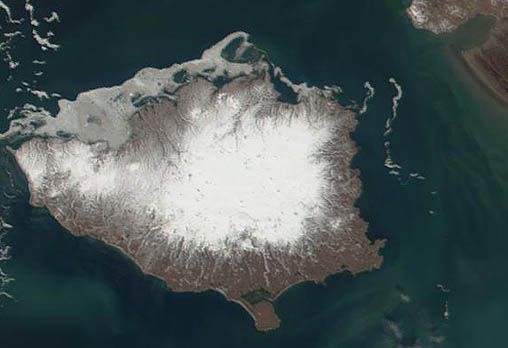
In the late summer of 1930, a fur-trapper working the windswept coast of Nunivak Island in the Bering Sea approached the Yup'ik fishing camp at Nash Harbor to trade and found it completely deserted. Cooking fires still smoldered, fish hung half-cleaned on drying racks, sealskin kayaks were pulled up on the gravel beach, and — most chillingly — a child's sled-dog harness still hung from a spruce pole where it had been left in use minutes before. Not a single human, living or dead, remained. No tracks led away from the camp. No bodies drifted into the bay. The thirty-odd residents of the village had simply disappeared.
The trapper, whose account was relayed to the Bureau of Indian Affairs station at Bethel and eventually to the Anchorage Daily Times, described the scene as feeling 'wrong from the first step' — abnormally silent, with the dogs all gone too. A U.S. Revenue Cutter dispatched from Nome found the same tableau two weeks later: an intact village abandoned in mid-task. A meager investigation attributed the disappearance to a possible disease outbreak prompting a sudden migration, though no graves, bodies, or survivors were ever located in adjacent Yup'ik villages on the mainland. The story pre-dates and in many details prefigures the more famous (and likely apocryphal) Anjikuni Lake disappearance alleged to have occurred in Nunavut the same year.
Unlike Anjikuni, the Nunivak account appears in multiple period sources, including Alaska newspapers of November 1930 and a 1934 ethnographic survey by Margaret Lantis, who visited Nash Harbor and found the site still uninhabited and the cache boxes intact. Lantis reported that Yup'ik elders on the mainland refused to discuss the site or to cross the bay to visit it. Whether the residents were lost to storm, disease, or something darker, the Nunivak abandonment remains one of Alaska's least-known but most-documented mass disappearances.