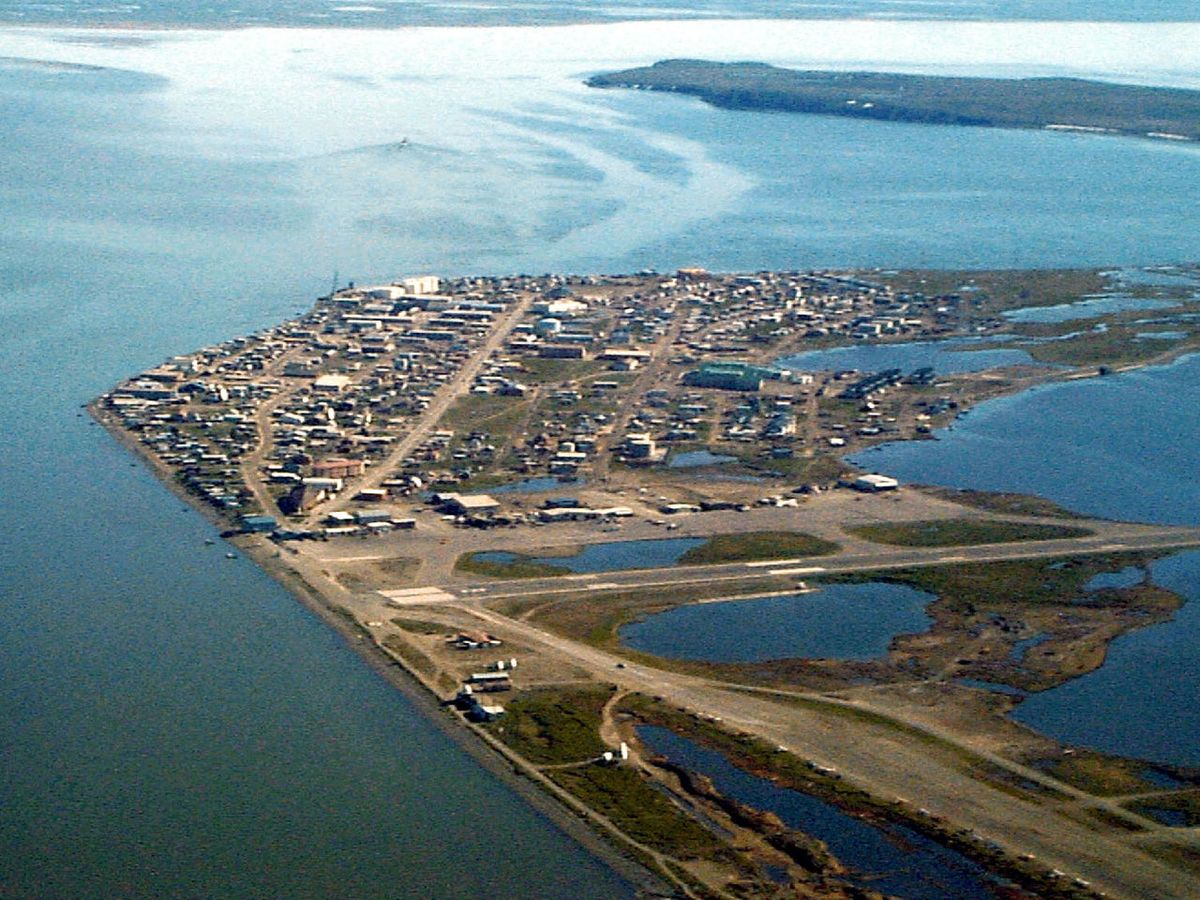
Project Blue Book Case #7818. On February 25, 1962, an unidentified object was observed near Kotzebue, Alaska — a remote Inupiat community above the Arctic Circle on the coast of Kotzebue Sound. The town was adjacent to a Distant Early Warning (DEW) Line radar station, part of the chain of installations stretching across Arctic North America designed to detect incoming Soviet bombers.
Kotzebue sits at approximately 67° North latitude, well above the Arctic Circle. In late February, daylight was just returning after the long polar winter, and atmospheric conditions in the Arctic were complex — aurora borealis, extreme cold creating ice crystals and optical effects, and the unusual lighting of extended twilight. DEW Line personnel were specifically trained to differentiate these phenomena from genuine aerial contacts.
The DEW Line was the Cold War's most forward sensor system, designed to provide approximately three hours of warning before Soviet bombers could reach American cities. Any unidentified object detected by DEW Line stations was treated with maximum urgency — it could represent the opening move of a nuclear attack.
Despite the Arctic's challenging observation conditions and the operators' thorough training in Arctic atmospheric phenomena, the object could not be identified. The case was classified "Unknown" — a deeply concerning result from a facility whose sole purpose was detecting and identifying aerial objects.