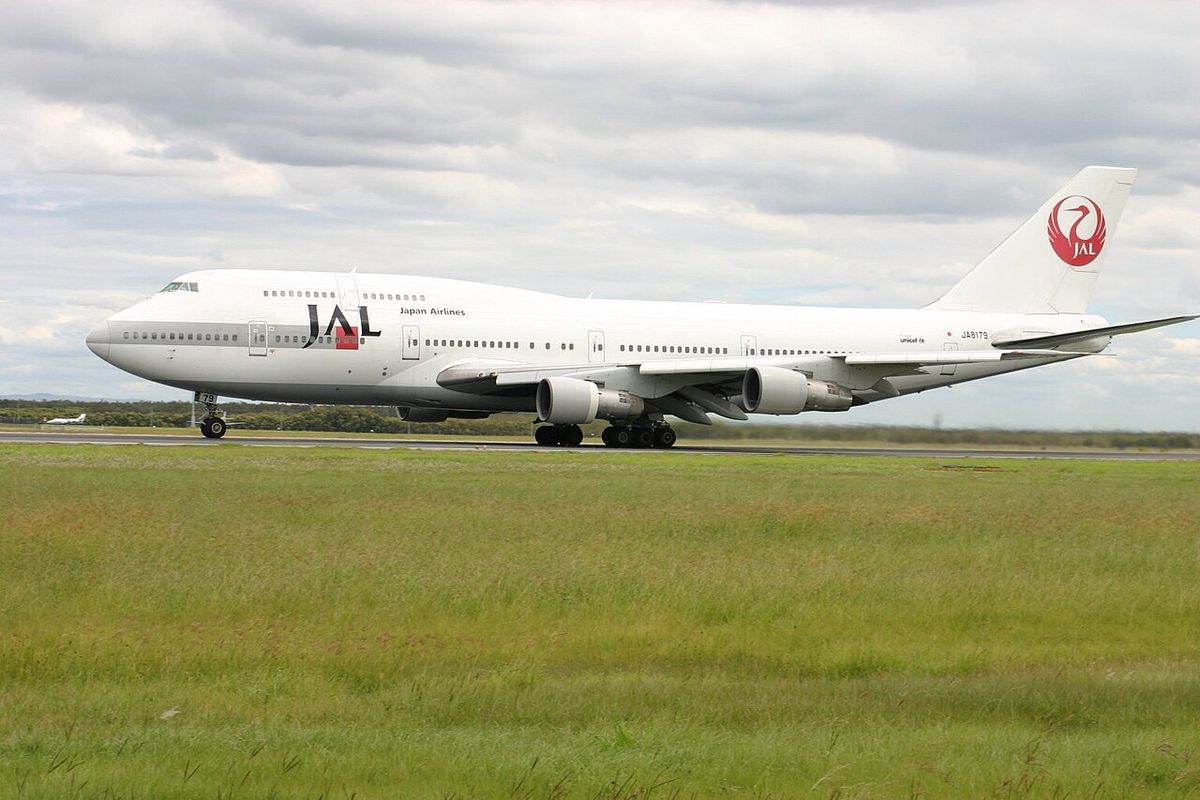
On the clear, moonlit evening of November 17, 1986, Japan Air Lines Flight 1628 — a Boeing 747-200F cargo jet carrying Beaujolais wine from Paris to Tokyo via Anchorage — was cruising at 35,000 feet above eastern Alaska when Captain Kenju Terauchi, a seventeen-year JAL veteran and former fighter pilot, noticed three sets of unusual lights pacing his aircraft. At 6:19 PM two walnut-shaped objects appeared directly in front of the 747, each producing exhaust-like jets of light. The lights stayed with the plane for the next fifty minutes, at one point approaching close enough that Terauchi reported feeling radiated heat on his face through the cockpit window.
As the 747 descended toward Anchorage and banked left at 25,000 feet, the two smaller objects vanished. Behind them, silhouetted against the city lights of Fairbanks in the distance, Terauchi now saw a third, massive object — a 'mothership' he estimated to be twice the size of an aircraft carrier. Both FAA ground radar at Anchorage Air Route Traffic Control Center and the aircraft's onboard radar recorded returns where the crew reported the objects. A United Airlines 747 and a USAF C-130 were vectored toward the area to corroborate, but by then the lights had moved on.
The FAA's John Callahan, then Division Chief of Accidents and Investigations Branch, later stated that he briefed the Reagan administration and CIA representatives on the case, after which the officials reportedly confiscated the radar data and stated that the meeting had 'never occurred.' Callahan retained his own copy of the evidence and in 2001 provided it to the National Press Club Disclosure Project hearing. The Anchorage ARTCC tapes clearly show the returns, and the FAA internally acknowledged the event as an 'unknown' after a four-month investigation. JAL 1628 remains one of the best-documented commercial-aviation UFO encounters of the twentieth century.