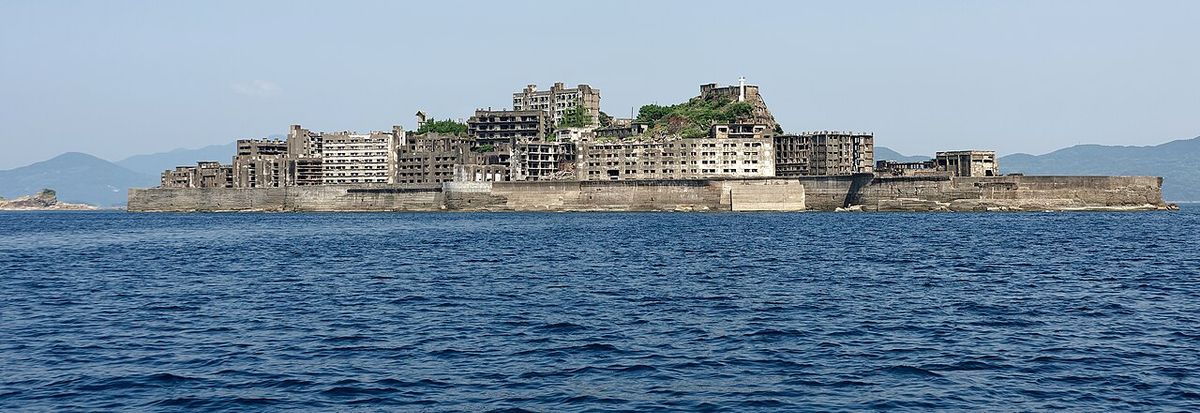
Hashima Island, popularly known as Gunkanjima (軍艦島, 'Battleship Island') for its distinctive silhouette, is a sixteen-acre concrete ruin in the East China Sea, 15 kilometres off the port city of Nagasaki. From 1887 to 1974 it operated as a Mitsubishi undersea coal mine, housing at peak density in the 1950s more than 5,000 miners and their families on an island the size of three Tokyo city blocks — making it briefly the most densely populated place in human history. Conditions were brutal: Korean and Chinese forced labourers during World War II died in the shafts, typhoons regularly swept the outer apartments, and the air was saturated with coal dust. When the coal veins were exhausted in 1974, the island was evacuated in a matter of weeks; residents left furniture, bicycles, schoolwork, and family shrines where they stood.
Hashima reopened to limited tourism in 2009 and was designated a UNESCO World Heritage Site in 2015. Since reopening, tour-boat operators, photographers, and the documentary crews of 'Skyfall' and NHK's 'Life After People' have reported a striking and consistent pattern of paranormal activity. Visitors in the former elementary school describe the sound of children's voices and chalk on blackboard; the former maternity clinic registers sudden temperature drops and the impression of an infant crying from a sealed wing. The underground mining shaft elevator towers, though the tunnels themselves are flooded, produce deep booms and knocks that long-time boat captains have come to regard as routine. Korean cultural organizations representing descendants of forced labourers have performed formal jesa (ancestor-rite) ceremonies on the island.
The sheer scale of Hashima's sudden abandonment — a small city left intact — gives the ruins an unusually acute ghost-town atmosphere that combines Japanese yūrei tradition with the Korean han of trauma labour. Apartments still contain personal letters left on tables. The 1916 apartment tower, considered Japan's oldest concrete structure, leans at a visibly dangerous angle above the sea. Hashima's paranormal reputation has made it one of the most sought-after photographic destinations in Asia — and a place that even tourism operators admit feels 'watched' after dark.