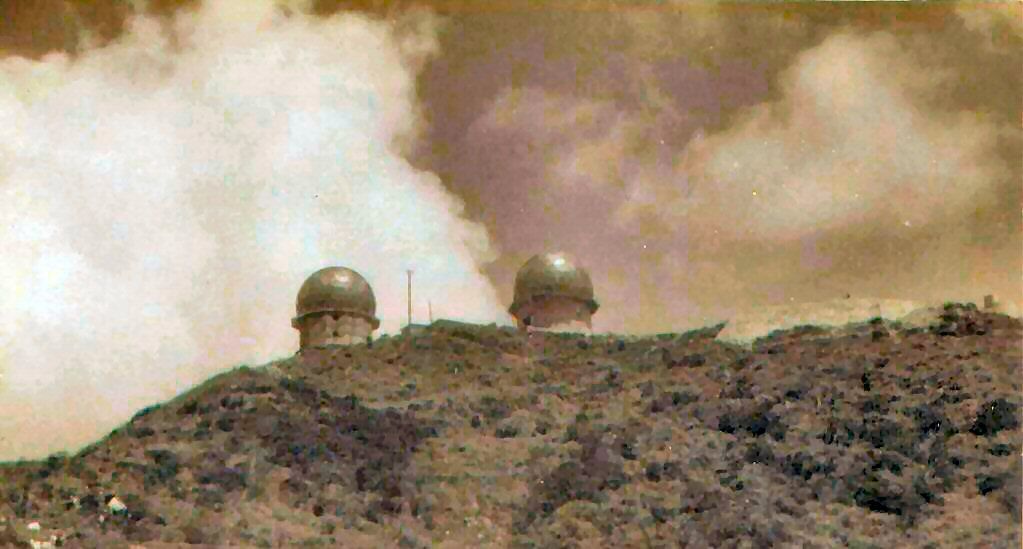
Project Blue Book Case #7437. On June 2, 1961, personnel at Miyako Jima Air Station — a U.S. Air Force radar and communications installation on Miyako Island in the Ryukyu Islands chain southwest of Okinawa — reported an unidentified aerial object. The station's primary mission was air defense surveillance of the western Pacific approaches, monitoring potential Soviet and Chinese military air activity.
Miyako Jima occupied a strategically critical position in the "first island chain" — the arc of islands from Japan through Okinawa to Taiwan and the Philippines that formed the outermost line of Western Pacific defense. Personnel stationed there operated sophisticated radar and communications equipment and were trained to identify all manner of aircraft, missiles, and space debris that might appear in the region's airspace.
The unidentified object detected at Miyako Jima displayed characteristics that the station's trained operators could not attribute to any known aircraft type — friendly, hostile, or civilian. The western Pacific was a complex aerial environment, with military flights from U.S., Japanese, and potentially Chinese or Soviet forces all operating within range. Despite this complexity, the station's personnel were specifically trained to differentiate between these various sources.
The investigation involved coordination with Pacific Air Forces headquarters and regional air defense networks. No military or civilian aircraft from any nation could be identified to account for the detection. The remote Pacific island setting, combined with the expertise of the observers, made this case notable. It was classified "Unknown" — an unsettling determination for a facility whose mission was maintaining air surveillance supremacy in a potential conflict zone.