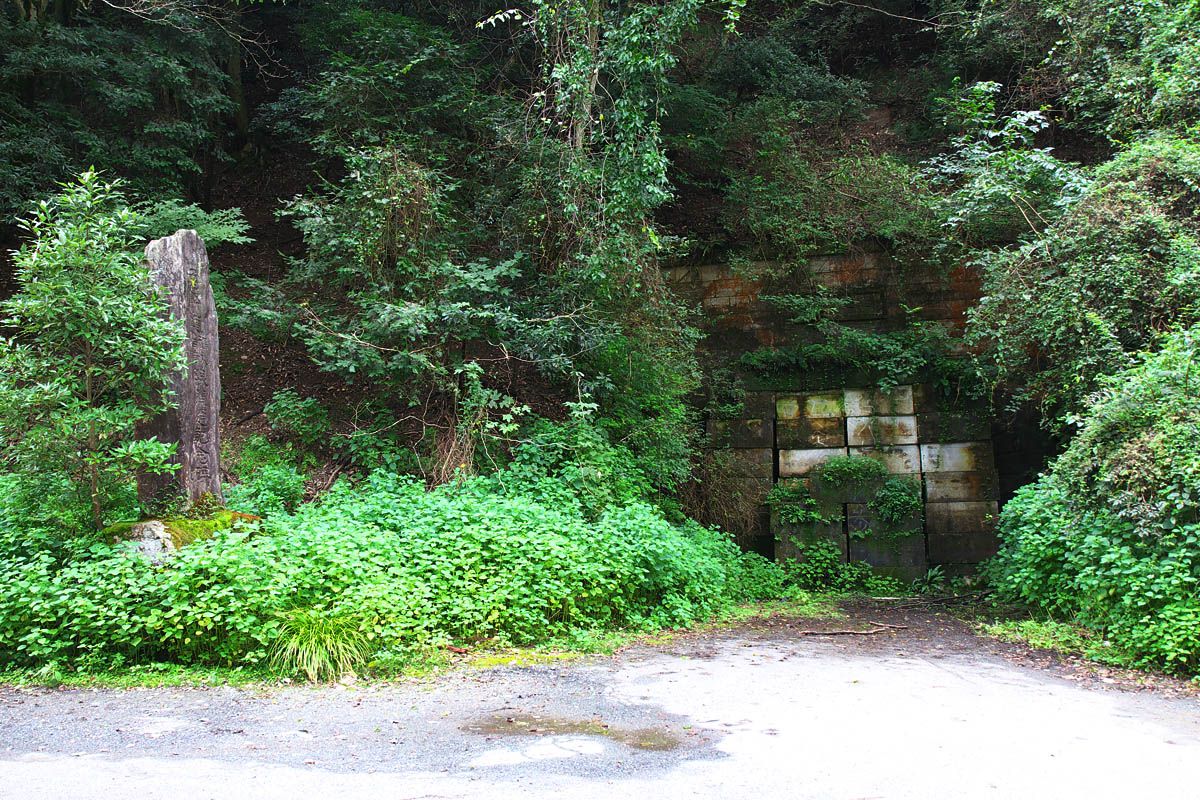
Inunaki Village is the central subject of one of modern Japan's most-discussed contemporary urban legends: an allegedly forbidden community isolated in the hills of Fukuoka Prefecture, supposedly abandoned by (or cut off from) the Japanese state and operating under its own laws. According to the legend, a dilapidated sign at the village's entrance reads 'The constitution of Japan does not apply beyond this point,' and visitors who enter rarely return. The legend consolidated in the late 1990s around the real landscape of the Old Inunaki Tunnel and the actual abandoned village of Inunaki, which was formally submerged in 1986 when the Inunaki Dam was completed above the Wakita River.
The genuine history is grim enough. The Old Inunaki Tunnel (built 1889, bypassed 1975), now sealed to traffic, is where in December 1988 a 20-year-old man named Umemoto was murdered by five youths who beat him, doused him with petrol, and burned him alive inside the tunnel. The tunnel has subsequently been the site of multiple suicides and reported supernatural encounters. A YouTube survey of Japanese ghost researchers conducted in 2019 found the Old Inunaki Tunnel to be the most-visited haunted location in Kyūshū. Visitors report disembodied voices in Japanese calling for help, cold spots, apparitions of a hooded figure, and car engines that mysteriously fail and restart.
The 'lost village' legend layers onto the real submerged settlement. Local historians note that Inunaki was a genuine Meiji-era community whose inhabitants were relocated in stages between 1970 and 1986 for the dam project; the legend of its existence 'outside Japan's constitution' appears to date from the late 1990s. A 2020 J-horror film starring Ai Yoshikawa and directed by Takashi Shimizu dramatized the legend, introducing it to a global audience. Fukuoka Prefectural Police have issued multiple statements confirming that no surviving Inunaki Village exists — but also confirming that visitors who ignore the 'no entry' signs at the Old Tunnel continue to report severe disorientation and psychological distress.