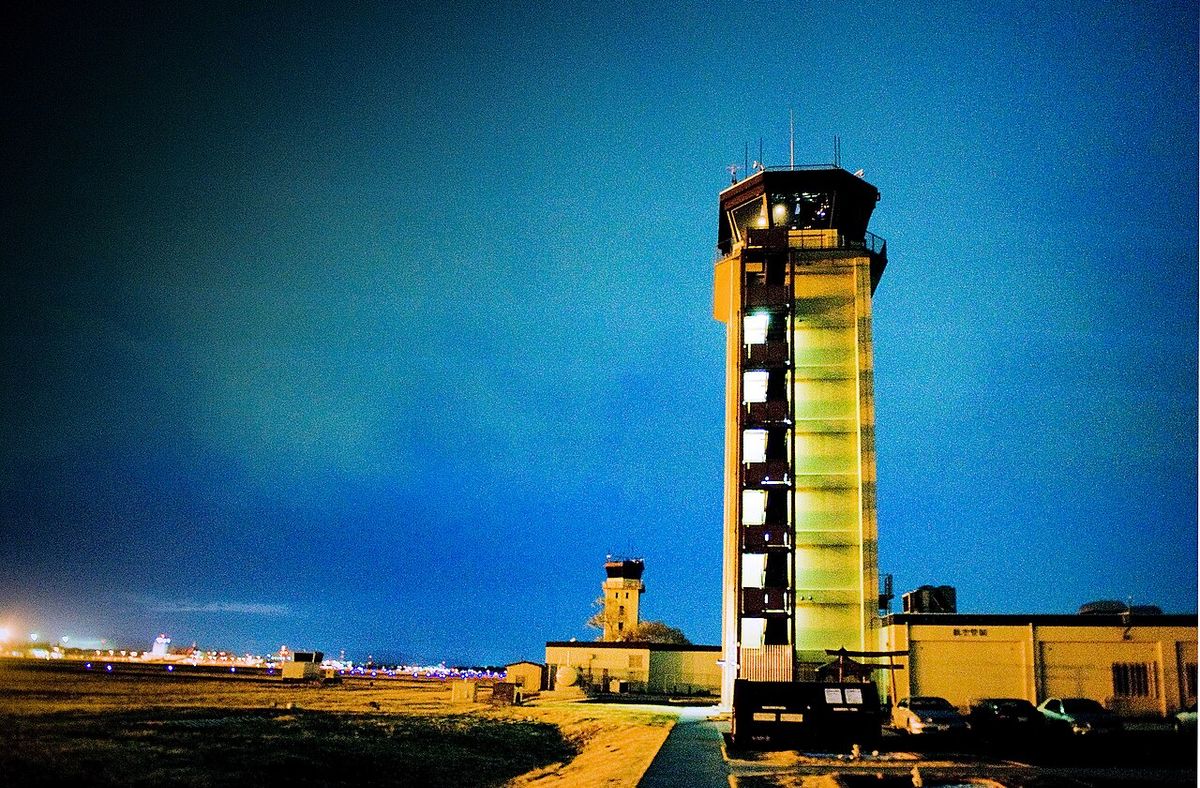
Yokota Air Base, in western Tokyo, and Kadena Air Base, on Okinawa, have collectively produced one of the densest sustained UFO-report corridors within the U.S. Department of Defense's overseas presence. Between 1986 and the present, declassified and leaked internal reports from U.S. Pacific Air Forces (PACAF) operations logs, U.S. Navy Naval Security Group (NSG) Kadena intercepts, and independent Japanese civilian observations have catalogued more than 200 anomalous aerial incidents in the airspace around these two bases. The concentration has drawn official attention from the Japan Air Self-Defense Force (JASDF), the Defense Intelligence Agency, and in 2021–23 from the U.S. Department of Defense's All-Domain Anomaly Resolution Office.
Among the most credible reports: on June 24, 1987, Yokota Tower controllers tracked a silent object over Tama District at an altitude of 40,000 feet for more than forty minutes, simultaneously confirmed on the JASDF Iruma radar and observed visually by a C-130 aircrew. On November 7, 1989, a Kadena-based RC-135 aircrew reported an 'enormous triangular aircraft' passing at an estimated altitude of 60,000 feet over the East China Sea; the report was classified and has only partially been declassified. A 2004 Kadena flight-line incident involved three security-police personnel independently reporting a low-altitude hovering ovoid object that 'rippled the runway heat mirages' for over a minute before accelerating vertically. In March 2023, a JASDF F-15 scrambled out of Naha intercepted and briefly tracked an object performing 'non-ballistic' maneuvers over the Senkakus.
Japanese civilian UFO researcher Kiyoshi Amamiya has catalogued 76 Yokota-region reports between 1984 and 2001, of which 11 have been subsequently declassified in American or Japanese official channels. The Japanese newsmagazine 'MU' and the Okinawa-based 'Ryūkyū Shimpō' regularly publish military-adjacent encounter reports. The Yokota–Kadena UFO corridor remains one of the most strategic and least-explained operational environments in the Western Pacific.