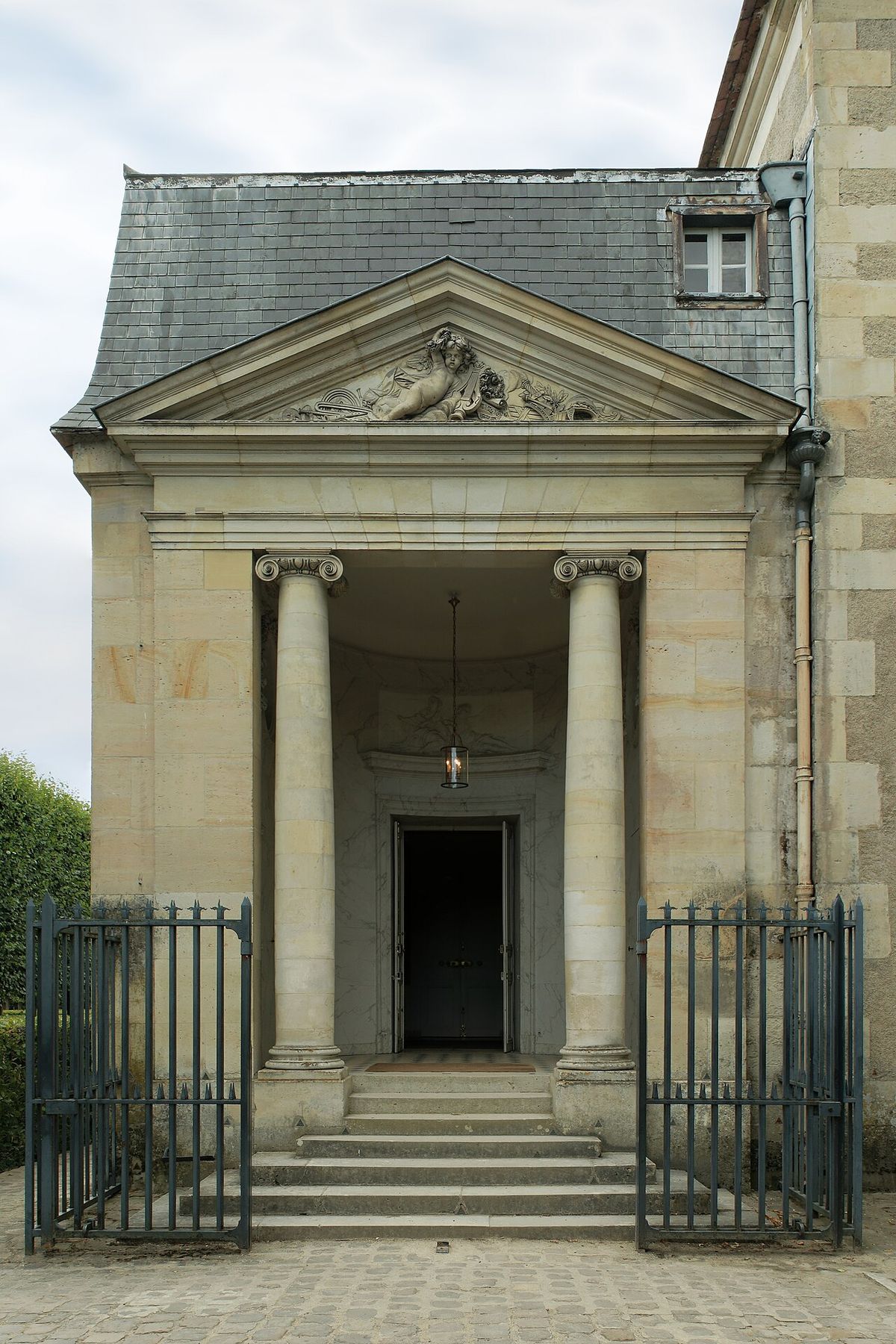
On August 10, 1901, Miss Charlotte Anne Moberly, Principal of St Hugh's College, Oxford, and Miss Eleanor Jourdain, subsequently Vice-Principal, were visiting the gardens of the Palace of Versailles. Wandering toward the Petit Trianon — Marie Antoinette's private retreat within the Versailles estate — the two Englishwomen became disoriented in the formal gardens and passed through what they later described as a 'cold gloomy atmosphere' in which everything around them appeared 'curiously flat.' They observed a series of oddly-dressed figures in eighteenth-century costume: men in green coats and tricornes, a woman in a white summer dress sketching at an easel who closely resembled the doomed queen, and two cottagers who pointed them in what turned out to be the wrong direction.
Returning to their hotel, Moberly and Jourdain independently recorded what they had seen. The details they noted included specific architectural features — a small kiosk, a plough in a particular field, a bridge — that subsequent research indicated had been present at the Petit Trianon in 1789 but had been removed decades before 1901. In 1911, under the pseudonyms Elizabeth Morison and Frances Lamont, the two women published 'An Adventure,' a detailed account of their experience and the ten years of historical research they had conducted to establish that they had apparently passed briefly into the environment of the Petit Trianon as it had existed on or about October 5, 1789 — the day of the Women's March on Versailles.
The Moberly–Jourdain incident became the foundational modern Western 'time-slip' case, heavily influencing twentieth-century paranormal research into temporal anomalies. Skeptical analyses — including Lucille Iremonger's 1957 'The Ghosts of Versailles' and subsequent reassessments — have argued that the two women likely encountered a rehearsal of a tableau vivant mounted by the Comte Robert de Montesquiou's circle, whose members were known to have staged such period-costume scenes at the Trianon in 1901. Defenders of the time-slip interpretation counter that the two women's archival research identified specific features only verifiable in Versailles archives that were closed to the public at the time. The case remains the most thoroughly-documented, highest-credibility temporal-anomaly report in European paranormal literature.