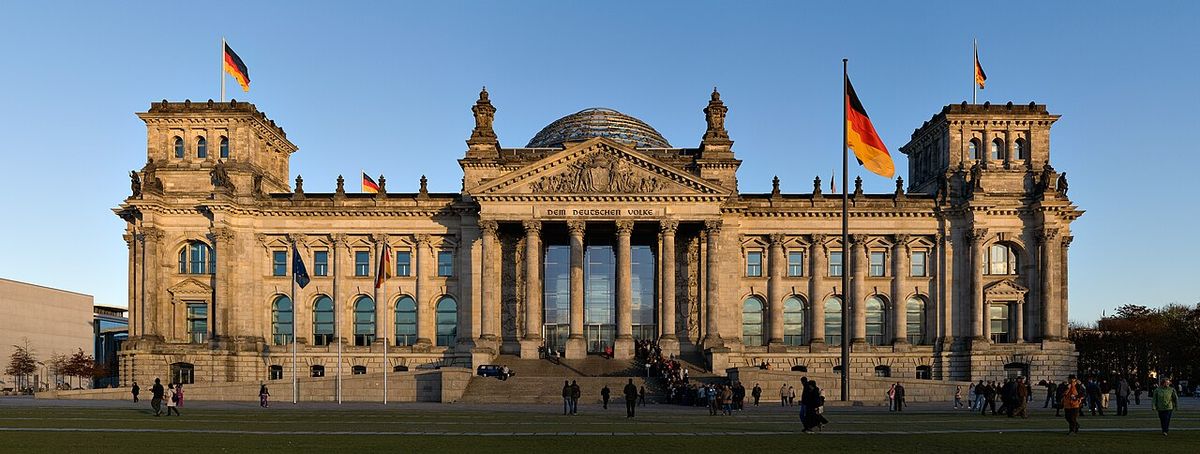
The Reichstag building in Berlin, seat of the German Bundestag, has been reported to be haunted by ghosts of famous German politicians from its tumultuous history. The building, completed in 1894, has witnessed the German Empire, the Weimar Republic, the Reichstag fire of 1933 that enabled Hitler's consolidation of power, the Battle of Berlin in 1945, and Germany's reunification in 1990. Staff working late in the building have described hearing heated political debates echoing from the empty plenary chamber, footsteps in the corridors that keep pace with their own, and the apparition of figures in formal 19th-century attire in the older sections.
The Reichstag fire chamber — where the 1933 arson attack occurred — is considered a particularly charged area. The building's history encompasses some of the most consequential events of the 20th century, and the emotional intensity of the decisions made within its walls may have left an imprint. After Norman Foster's dramatic glass dome renovation in 1999, some staff reported that the ghostly activity increased, as though the renovation disturbed long-settled spirits.
The Reichstag stands as a physical record of German democracy's death and resurrection — and some of its former occupants may still be debating within.