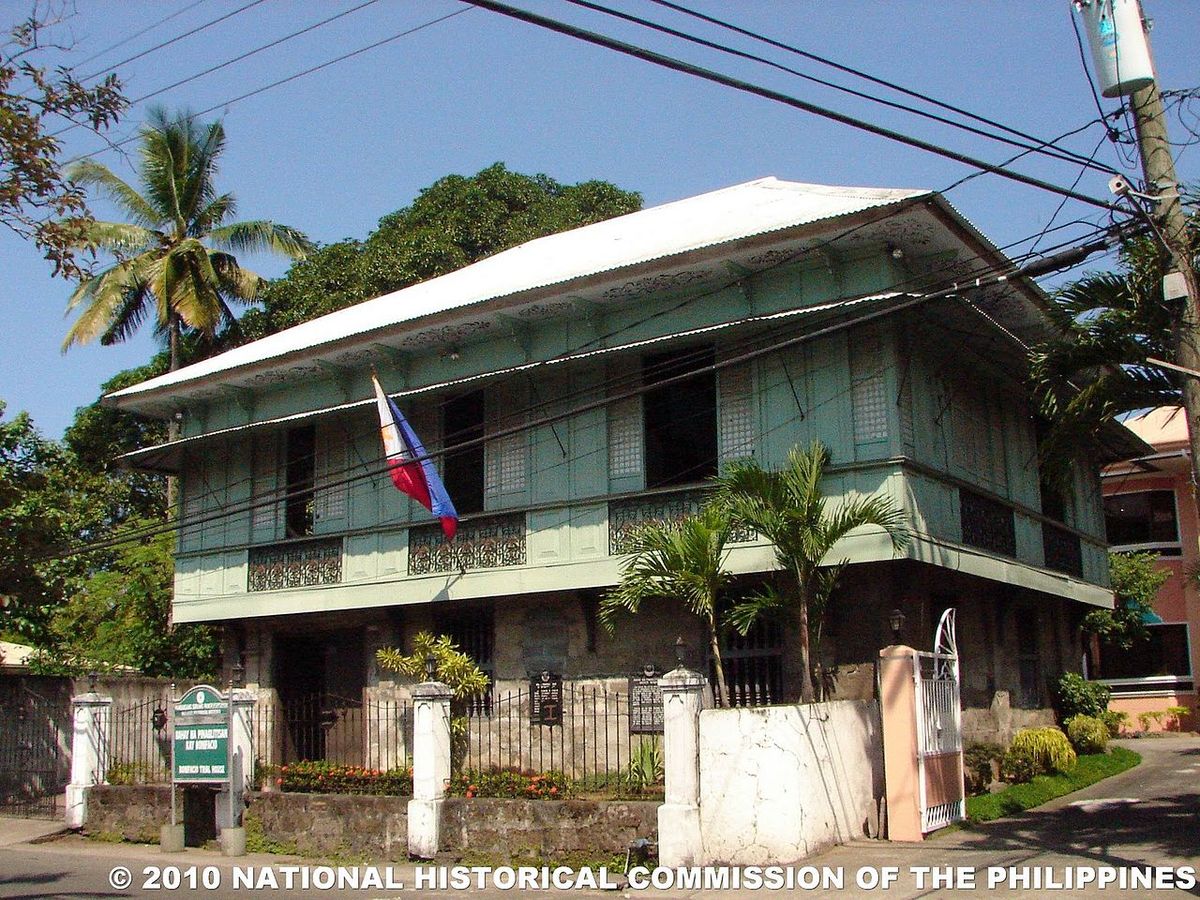
In the town of Maragondon, Cavite, stands the house where Andres Bonifacio — the founder of the Katipunan revolutionary movement and the father of the Philippine Revolution — was tried by a military court and sentenced to death in May 1897. The trial, ordered by rival revolutionary leader Emilio Aguinaldo, condemned Bonifacio and his brother Procopio on charges of sedition and treason against the revolutionary government. Both were executed in the mountains of Maragondon shortly afterward, in one of the most controversial episodes in Philippine history.
The Bonifacio Trial House, now preserved as a national shrine, is said to harbor the spirits of those connected to the revolutionary drama that unfolded within its walls. Visitors and caretakers report two primary apparitions: a white lady who appears in the rooms where the trial proceedings took place, and a woman wearing a traditional "baro't saya" — the formal Filipino dress of the late 19th century — who has been seen on the staircase and in the windows of the upper floor.
The identity of the white lady has been the subject of speculation. Some believe she is connected to Gregoria de Jesús, Bonifacio's wife, who was present during his arrest and trial and who spent decades afterward fighting to restore her husband's reputation. Others suggest she may be one of the women of Maragondon who witnessed the trial and the anguish it brought to the revolutionary movement.
The house itself vibrates with the unresolved tension of Philippine history. Bonifacio's execution remains a source of national debate — was it a necessary act of revolutionary consolidation, or the murder of a hero by a political rival? The ghosts of the trial house may be a manifestation of that unresolved question: spirits caught in the moment when the revolution turned against one of its own founders, replaying a trial whose verdict the nation has never fully accepted.