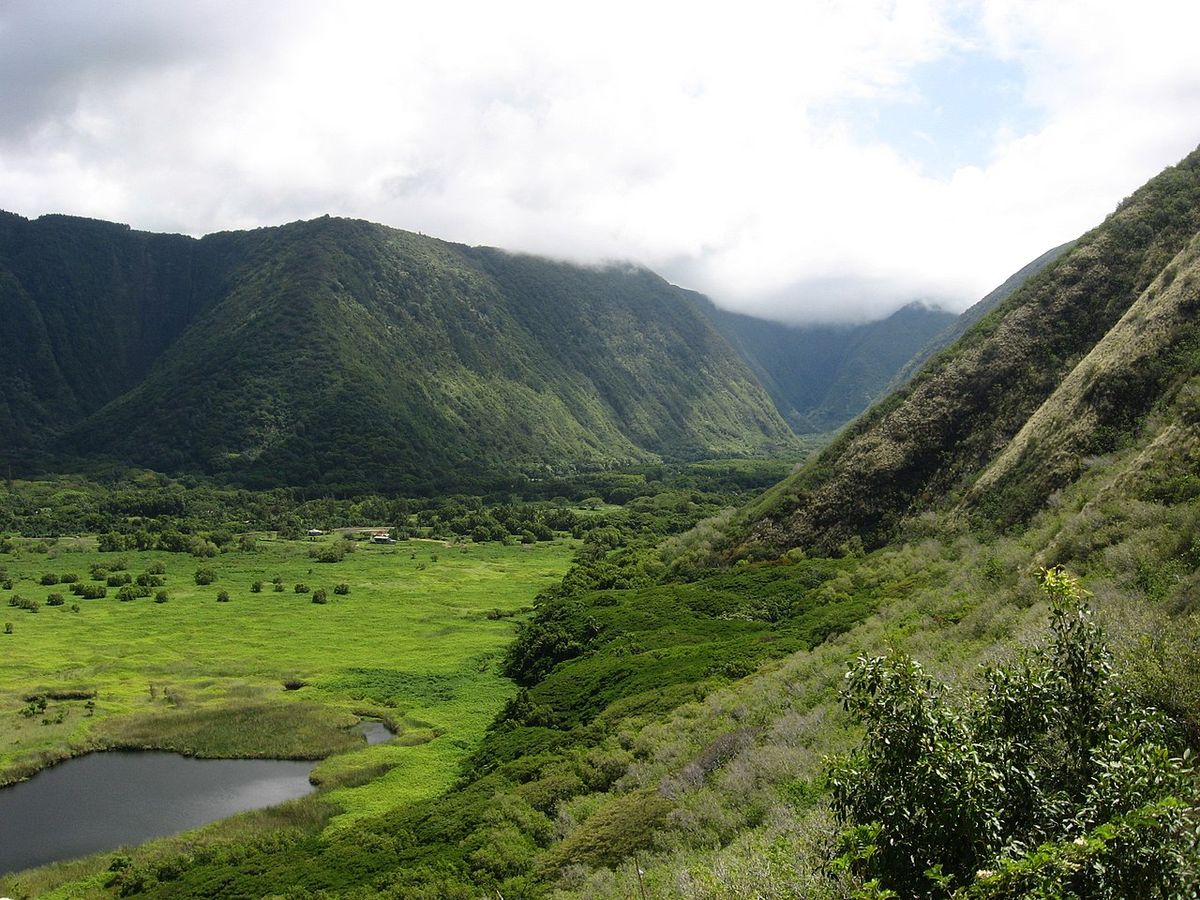
Waipi'o Valley, on the windward coast of Hawai'i Island, is a thousand-foot-deep emerald amphitheater of taro lo'i, waterfalls, and black-sand beach that in pre-contact times supported a population of several thousand Native Hawaiians and served as the residence of multiple ali'i of the Kohala and Hāmākua districts. It is also the reputed home of one of the most feared apparitions in modern Hawaiian folklore: the Faceless Woman (mu-kakana, 'no-face'), a tall figure in a white mu'umu'u who approaches lone travelers along the valley trail or the black-sand beach, turning to reveal a smooth, featureless head.
Reports of the Faceless Woman go back at least to the 1946 tsunami that destroyed the valley village and killed many residents; survivors and recovery crews described encountering a tall white-clad woman walking among the debris who would not respond to questions and who revealed no face when addressed. Subsequent accounts — most concentrated between dusk and dawn — have come from taro farmers, tour-van guides, a Hawaii Fire Department rescue team during the 1979 Waipi'o flood, and multiple backpackers on the Muliwai Trail over to Waimanu Valley. The apparition is never reported as aggressive. Instead, witnesses describe a specific reaction: an involuntary, complete retreat and a strong conviction that they have been in the presence of something ancient and sacred rather than malevolent.
Hawaiian cultural practitioners relate the Faceless Woman to an older class of guardian spirits — 'aumakua — who watch over particular kapu places. Waipi'o's archaeological significance is immense: it is home to the heiau of Paka'alana, the burial caves of Kamehameha I's ancestors, and the Place of the King. The valley's persistent geomagnetic anomalies (noted by USGS surveys in 1977), thick rainforest, and low resident population combine to give it an atmosphere unlike anywhere else in the island chain. Waipi'o has become shorthand in Hawaii for a landscape so spiritually charged that it produces apparitions on its own terms.