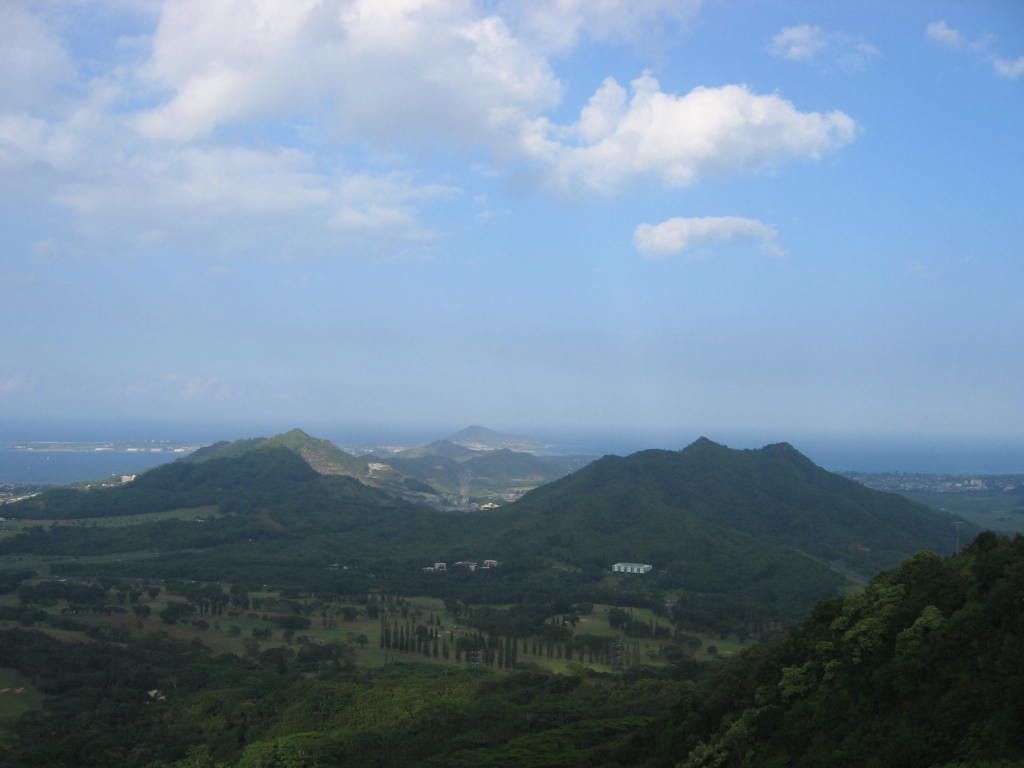
Among the most fundamental and feared elements of Native Hawaiian spirituality are the Huaka'ipo — literally 'Night Marchers' — processions of the spectral warriors of the ali'i (royalty) who tread the paths of their ancient campaigns after dark. They are said to appear as columns of torchbearing figures accompanied by the thunder of drums, conch-shell calls, and the chanted oli of their order. The procession generally travels from mauka (mountain) to makai (sea), following the same routes their earthly counterparts followed in life — many of which are now overlaid by modern highways, golf courses, and resort hotels.
The tradition holds that any mortal caught in the path of a Night Marcher procession must lie face-down on the ground and remain absolutely still. Eye contact with the warriors is fatal unless a witness has a direct ancestral connection to one of the marchers, in which case a protecting ancestor will call out 'na'u!' ('mine!') and spare the onlooker. The procession's passage is preceded by a sudden stillness in the trees, a smell of earth and plumeria, and a low drumming felt as much as heard.
Specific locations on O'ahu are strongly associated with the marchers: the Nu'uanu Pali Lookout, where Kamehameha I's 1795 invasion drove hundreds of defenders over the cliff; the Ka Iwi coastline near Makapu'u; the ridge-line above the Kualoa Ranch; and the region around Kahekili's leap on the windward side. Kahekili, the eighteenth-century warrior-king of Maui and O'ahu, is said to lead one of the great processions. Multiple modern accounts — including a widely-reported 1973 incident at Kamehameha Schools, a 2004 encounter at Pearl Harbor Naval Base, and a 2015 Army Corps of Engineers crew sighting on Schofield Barracks — have been recorded. The Night Marchers remain one of the most vivid and continuously observed paranormal traditions in the United States, entirely rooted in living Hawaiian culture.