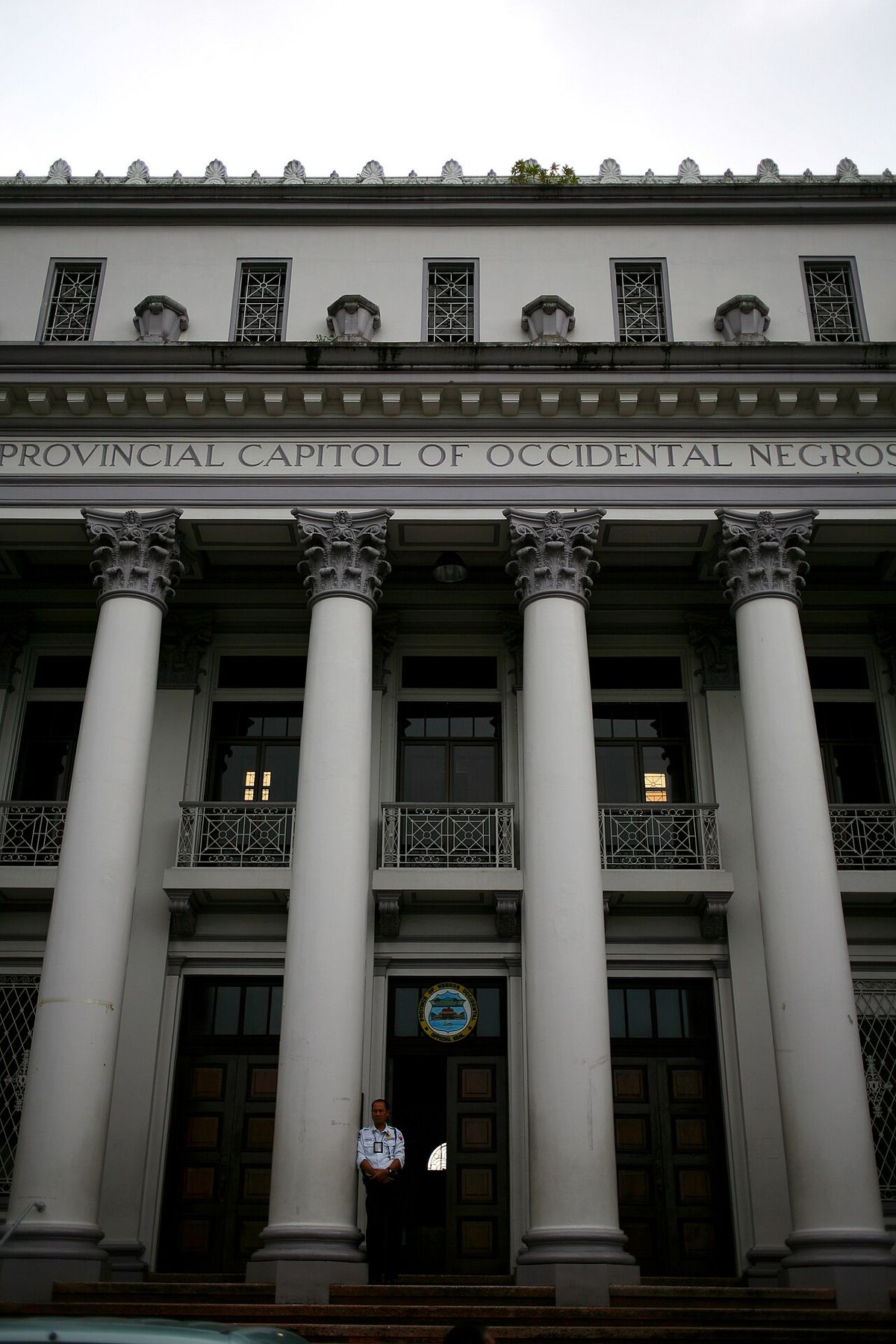
The Negros Occidental Provincial Capitol in Bacolod City, a neoclassical government building completed in 1933, served as the administrative headquarters for the Imperial Japanese Army during their occupation of western Visayas from 1942 to 1944. The building's basement was converted into a prison where suspected guerrilla fighters and civilians were detained under conditions of extreme brutality. Today, security guards who patrol the capitol after hours report encounters with both the wartime dead and a kapre — a towering tree spirit who has made the capitol grounds his home.
The wartime specters are the more frequently reported phenomenon. Guards describe seeing figures in Japanese military uniforms moving through the corridors of the building's lower floors and basement level. The apparitions appear to be conducting the business of occupation — walking with purpose, carrying documents or weapons, interacting with each other in ways that suggest they are unaware of, or indifferent to, the living guards who watch them. The smell of cigarette smoke and the sound of boots on stone floors accompany these sightings.
The kapre represents a different tradition entirely. While the Japanese specters are ghosts — spirits of the dead replaying their actions — the kapre is an elemental being, a nature spirit from pre-colonial Filipino mythology who has no connection to human death or history. Security guards report seeing the kapre's enormous silhouette in the large acacia and mango trees that shade the capitol grounds, his cigar glowing like a red star among the branches. The kapre is not considered dangerous, but his presence after dark is enough to make guards prefer indoor patrol routes.
The coexistence of wartime ghosts and a kapre within the same compound illustrates the layered nature of Filipino supernatural belief. The building carries the imprint of its colonial and wartime history, but the land it sits on carries something older — the presence of nature spirits who predate the building, the Japanese, the Americans, and the Spanish, and who will presumably remain long after the current structure has crumbled.