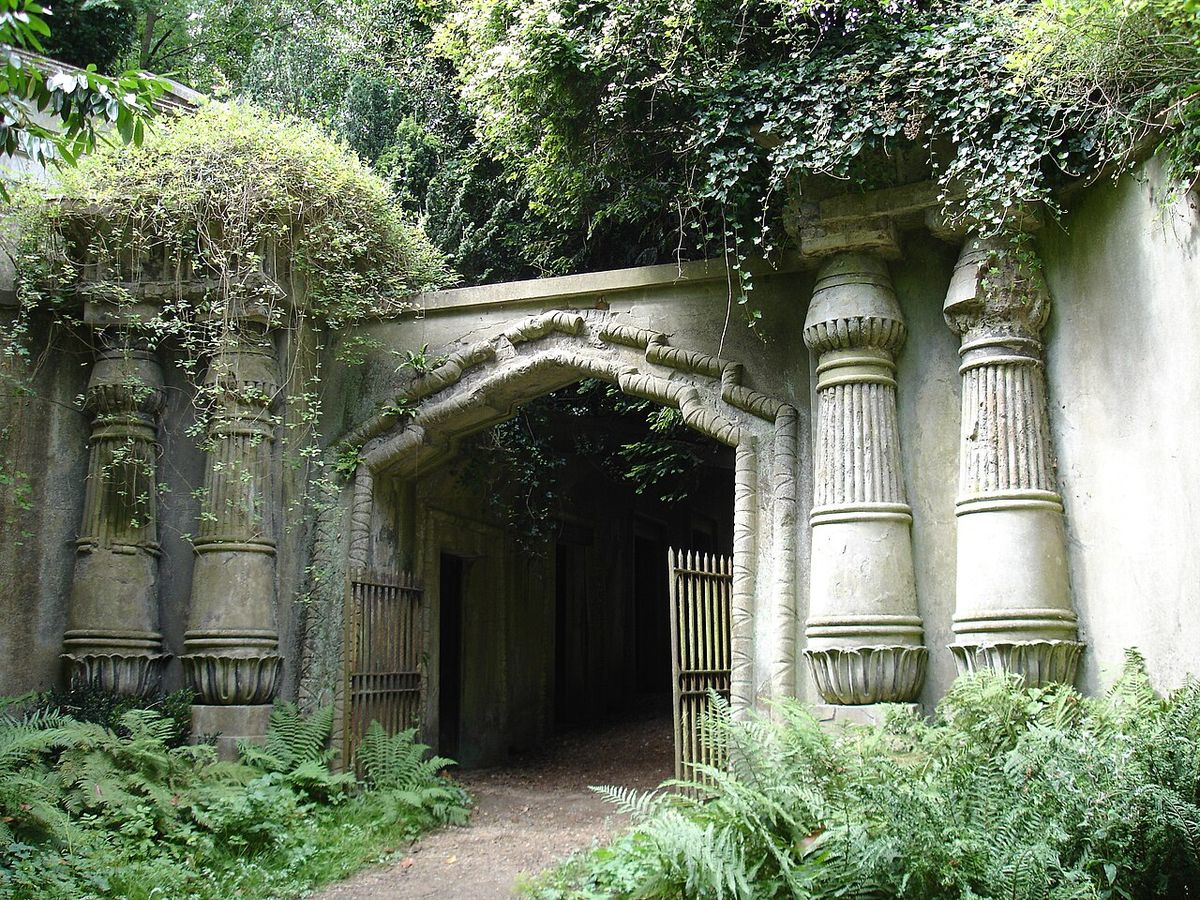
In the early 1970s, Highgate Cemetery in north London — one of the most atmospheric Victorian burial grounds in England — became the center of a bizarre vampire scare that blended gothic folklore with media sensationalism. The affair began in late 1969 when reports emerged of a tall, dark figure with hypnotic eyes being seen among the cemetery's overgrown monuments and crumbling catacombs. Two self-proclaimed vampire hunters, Sean Manchester and David Farrant, competed publicly for credit in confronting the entity. Manchester claimed to have conducted an exorcism in the cemetery, while Farrant was arrested in the churchyard carrying a crucifix and a stake.
The media coverage escalated the situation dramatically: on the night of Friday, March 13, 1970, a mob of would-be vampire hunters descended on Highgate Cemetery, scaling the walls with stakes, crosses, and garlic. The cemetery suffered significant vandalism, with coffins broken open and bodies disturbed. The Highgate Vampire affair has been analyzed as a case study in how media amplification can transform fringe beliefs into public panics, and how the atmospheric decay of a Victorian cemetery provided the perfect stage for a revival of vampire mythology.