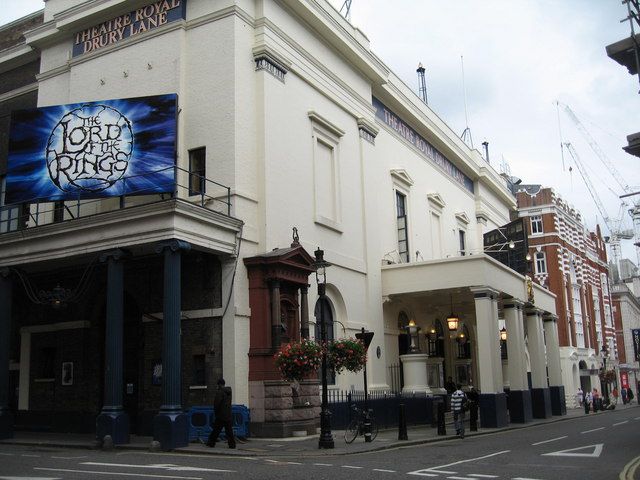
The Theatre Royal, Drury Lane — London's oldest theatre still in use, with a history stretching back to 1663 — is home to one of the most celebrated ghosts in British theatrical tradition. The Man in Grey is an 18th-century phantom who appears during daytime, most often during matinee performances and morning rehearsals. He is seen so frequently and so clearly that actors and theatre staff have come to regard his presence not with fear but with superstitious affection — his appearances are believed to presage a successful run.
The Man in Grey is described with remarkable consistency across sightings spanning well over a century. He wears a long grey riding cloak, a tricorn hat, and powdered wig, and carries a sword. He appears in the upper circle of the theatre, typically in the fourth row, and walks slowly from one side to the other before vanishing into the wall. He has never been observed to interact with witnesses or acknowledge their presence. His movements are calm, deliberate, and utterly silent.
In the 1840s, during renovation work on the theatre, a walled-up chamber was discovered behind the section of wall where the Man in Grey was seen to vanish. Inside was a skeleton with a dagger lodged between its ribs — a murder victim, walled up and hidden, perhaps two centuries earlier. The skeleton was removed and given a proper burial, but the Man in Grey continued to walk. His identity remains unknown. The tradition that his appearances predict theatrical success has been embraced by generations of performers — it is said that he was seen before the openings of Oklahoma!, My Fair Lady, and The King and I, all of which went on to be enormous hits at the Theatre Royal.