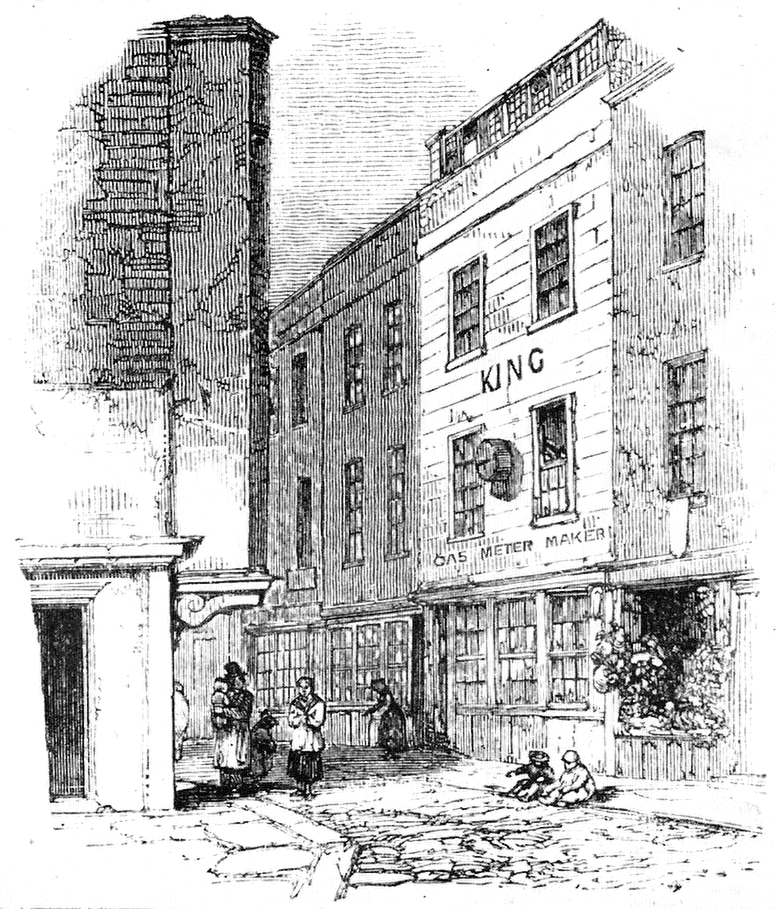
Cock Lane in Smithfield, London, was the scene of one of England's most infamous ghost cases — a sensation that gripped Georgian London in 1762 and drew the attention of Samuel Johnson himself. The disturbances centered on a narrow house where a stockbroker named William Kent had lodged with his common-law wife, Fanny Lynes. After Fanny died of smallpox in 1760, knockings and scratchings began emanating from the walls of the building, seemingly following the landlord's young daughter, Elizabeth Parsons.
The girl's father, Richard Parsons, claimed that the spirit of Fanny was communicating through a code of knocks — one rap for yes, two for no. The ghost, which became known as "Scratching Fanny," accused William Kent of having poisoned her. The story became a public phenomenon. Enormous crowds gathered in Cock Lane nightly, blocking the narrow medieval street. Newspapers published breathless accounts. The case divided London society between believers and skeptics.
Samuel Johnson led an investigating committee that attended a séance in the house and concluded the haunting was fraudulent when Elizabeth was caught hiding a small wooden board in her stays. Richard Parsons was convicted of conspiracy and sentenced to the pillory. Yet the case remains a landmark in the history of British ghost lore — one of the first haunting cases subjected to organized investigation, and a precursor to the methods later adopted by the Society for Psychical Research more than a century later.