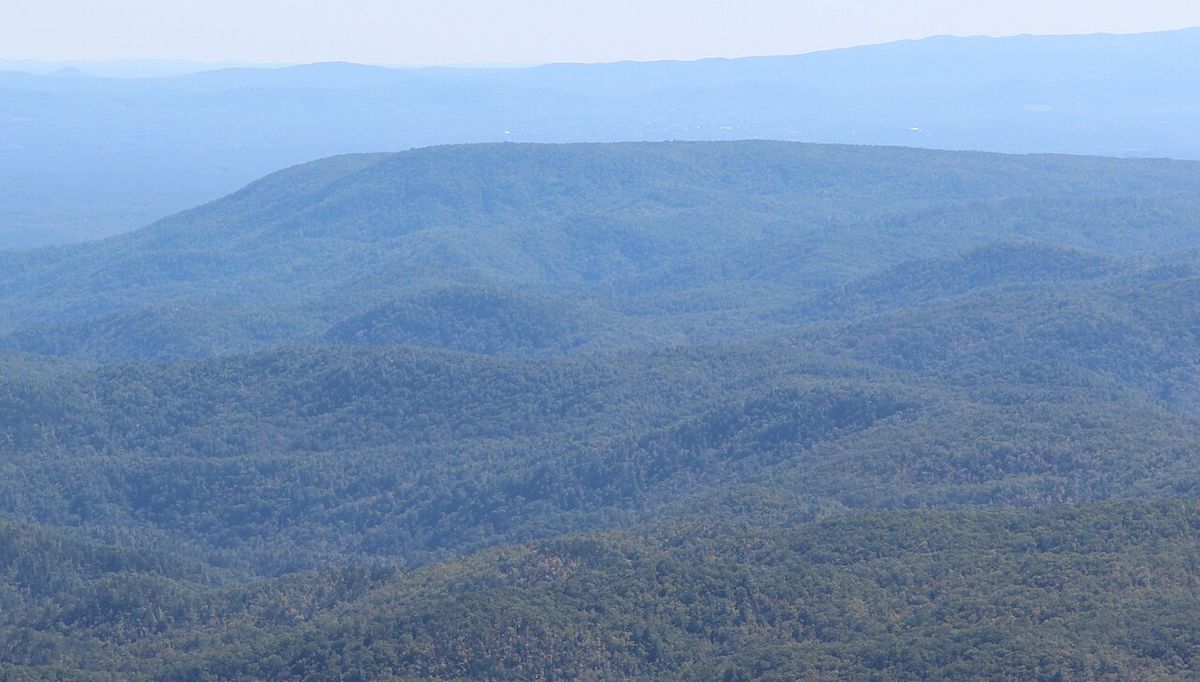
The Brown Mountain lights are mysterious luminous phenomena observed on and around Brown Mountain in the Pisgah National Forest, Burke County, North Carolina. The lights have been reported for over a century, with the earliest documented sighting attributed to a member of Gerard de Brahm's surveying expedition in 1771, though Cherokee and Catawba oral traditions suggest awareness of the lights long before European contact. The lights typically appear as glowing orbs that rise above the mountain ridge, hover briefly, and then fade or dart away. They range in color from white to yellow to reddish, and can sometimes be observed from multiple vantage points along the Blue Ridge Parkway and surrounding overlooks.
The U.S. Geological Survey investigated the lights twice — in 1913 and 1922 — but reached no definitive conclusion. The 1913 investigation suggested locomotive headlights, but the lights were observed again during a major flood that halted all train service in the area, effectively disproving this theory.
The 1922 study suggested brush fires or automobile headlights but acknowledged these explanations were incomplete. More recent theories include piezoelectric effects from quartz-bearing rocks under tectonic stress, swamp gas ignition, and ball lightning generated by the mountain's mineral-rich geology.