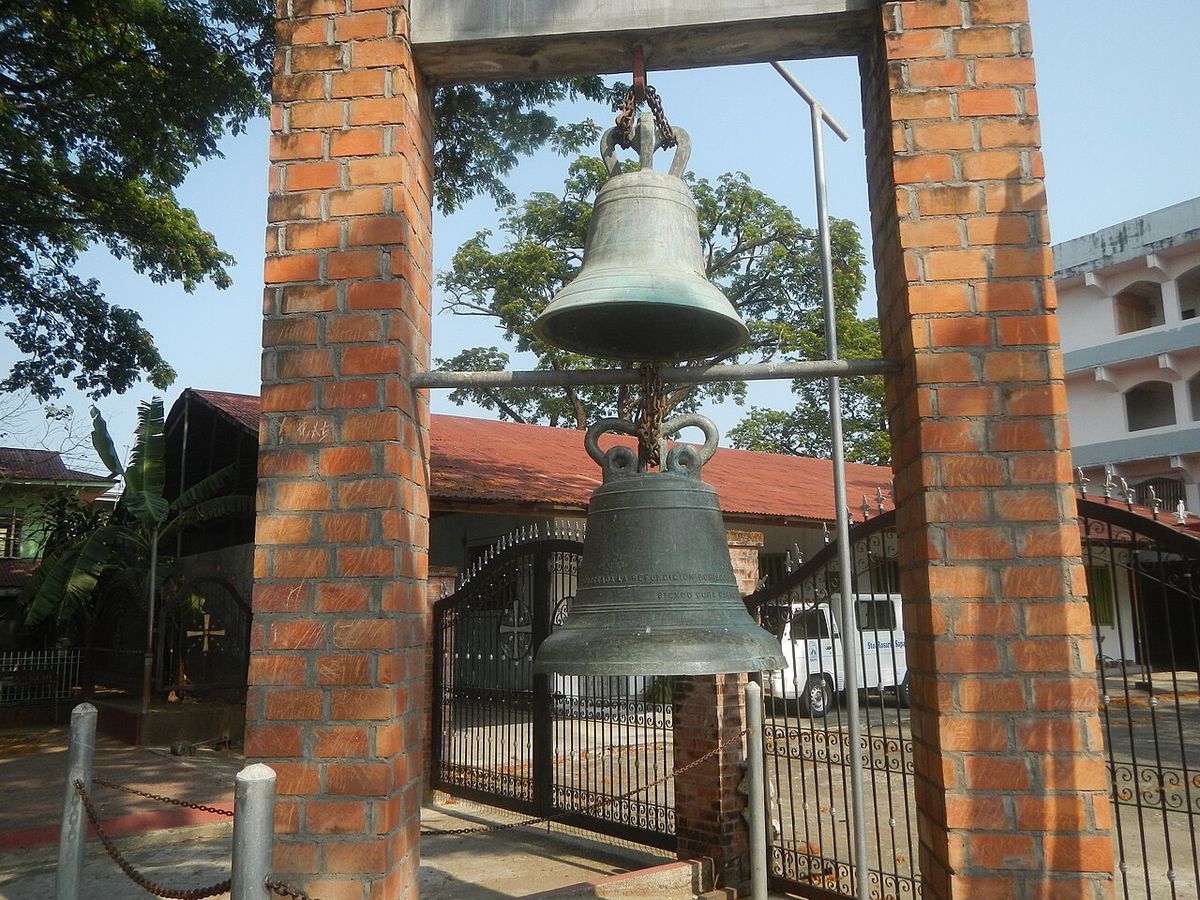
San Juan de Dios Church in San Rafael, Bulacan, is the site of one of the bloodiest single events of the Philippine Revolution — a massacre in 1896 that killed approximately 800 people within and around the church grounds. The scale of death has produced hauntings that persist over a century later, with the ghosts of children and a spectral nun reported among the most frequently encountered entities.
The massacre occurred during the early days of the Philippine Revolution against Spain, when revolutionary Katipunan forces clashed with Spanish colonial troops and their Filipino auxiliaries across the province of Bulacan. San Rafael, located in the heart of the rice-growing lowlands north of Manila, became a site of concentrated violence. The church of San Juan de Dios, where civilians had sought shelter, was overrun, and the killing that followed spared neither age nor gender.
The sheer number of dead — 800 in a single location — created a spiritual saturation point that the church building and its grounds have never recovered from. The ghosts of children are the most frequently reported, appearing in the church's interior and in the adjacent convent. They are described as small figures in period clothing who move through the church silently, sometimes in groups, and who vanish when directly approached. Their presence during religious services and community events has been noted by parishioners who have learned to accept the coexistence of the living congregation and the spectral children.
The ghost nun is seen in the convent area, moving through corridors that connect to the church. She is described as wearing the habit of a religious order active during the Spanish colonial period, and she carries herself with the composure of someone performing routine duties — walking with purpose, pausing at doorways, and continuing on a route that corresponds to the convent's original layout.
The church remains an active parish, and the community of San Rafael has maintained its relationship with the building despite — or perhaps because of — its violent history and its spiritual population.