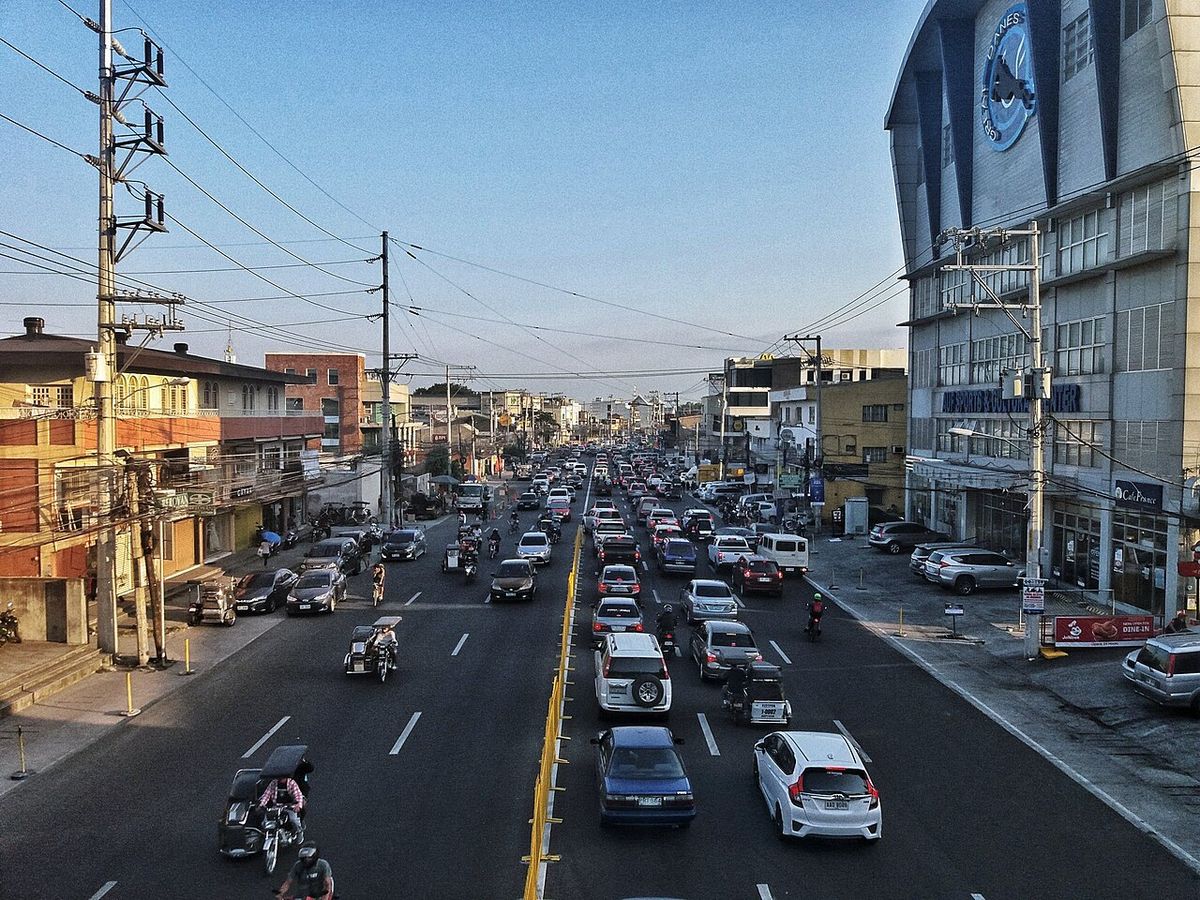
A section of MacArthur Highway between the municipalities of Bacolor and Guagua in Pampanga province is haunted by two apparitions that represent different eras of Filipino supernatural tradition: a hitchhiking white lady and a horse-drawn kalesa driven by a headless coachman.
The white lady follows the standard Filipino pattern — a female figure in white who appears at the roadside at night, flagging down motorists or materializing inside vehicles. She is described as young, with long dark hair and a pale face, and she vanishes without explanation after being picked up or spotted. The Pampanga version of the hitchhiking white lady is notable mainly for the specific stretch of road she occupies, a section between two towns that was heavily damaged by lahar flows from Mount Pinatubo in 1991, burying much of Bacolor under volcanic debris.
The headless coachman is the more distinctive and dramatic figure. He appears driving a kalesa — the horse-drawn carriage that was the primary mode of transportation in the Philippines during the Spanish colonial era — at full gallop along the highway. The kalesa is described as old-fashioned, its wooden construction and iron-rimmed wheels clearly belonging to another century, and the coachman who drives it sits upright on the driver's bench, handling the reins with practiced competence despite the absence of a head above his collar.
The apparition moves at speed along the highway, keeping pace with modern vehicles before turning off the road and vanishing. Some motorists describe the sound of hooves and wooden wheels on asphalt preceding the visual appearance of the kalesa, as if the ghostly carriage announces itself with sound before becoming visible.
The headless coachman of Kapampangan lore connects to a broader Filipino tradition of spectral transportation — ghost ships, phantom vehicles, kalesa de muerto — that suggests the dead continue to travel the routes they knew in life, using the conveyances of their era. The coachman's lack of a head implies violent death, possibly decapitation during the Philippine Revolution or the Filipino-American War, both of which saw intense fighting across Pampanga.