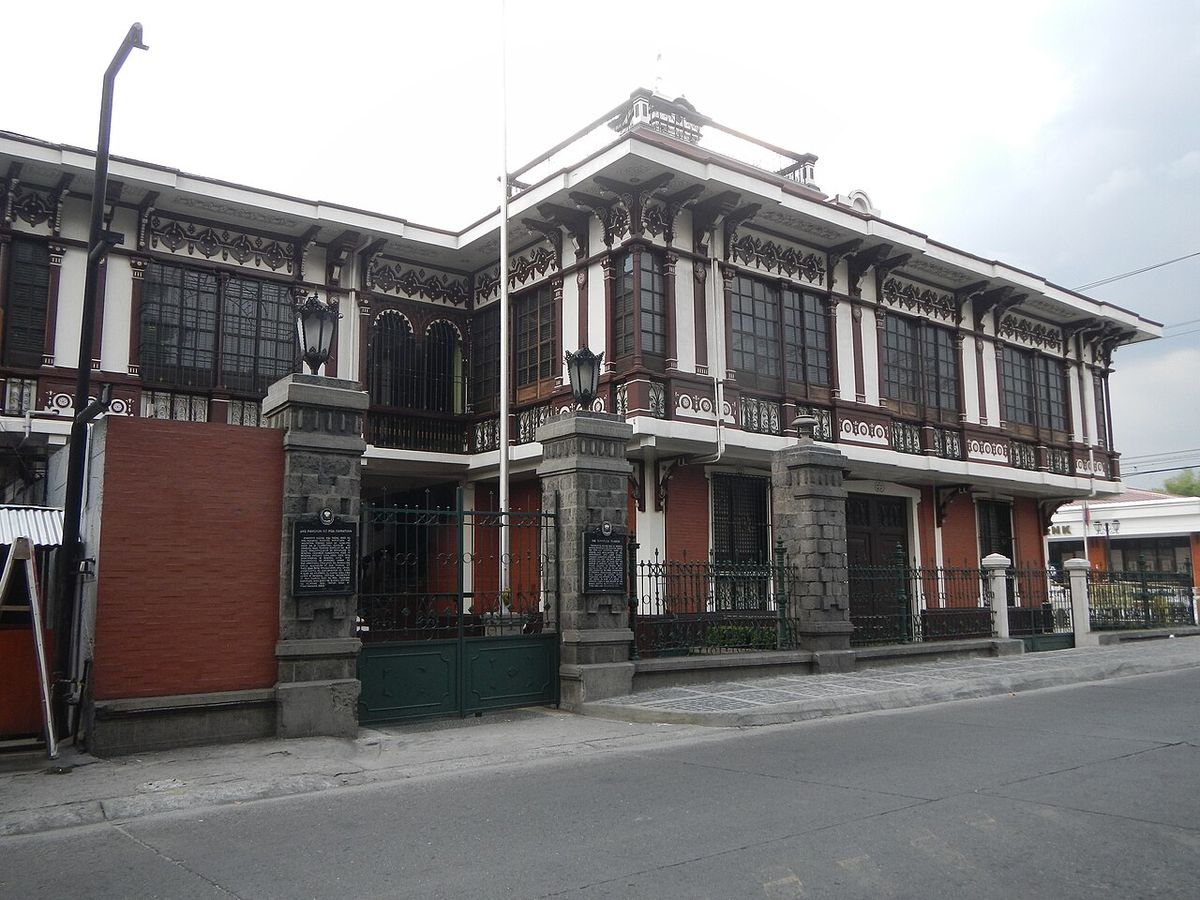
Pamintuan Mansion in Angeles City, Pampanga, is a grand 1890s residence that has served as the backdrop for some of the most dramatic moments in Philippine revolutionary history — and that harbors, in its distinctive rooftop tower, the spirit of a young woman who has been watching the city from her perch for over a century.
The mansion was built during the final years of the Spanish colonial era by the wealthy Pamintuan family, and it played a significant role during the Philippine-American War. In 1899, the mansion served as the headquarters of the Philippine diplomatic corps during the First Philippine Republic under President Emilio Aguinaldo. The building witnessed the negotiations, strategies, and ultimately the defeats that marked the end of the brief republic and the beginning of American colonial rule.
The ghost of the tower is described as a young woman — her age estimated in the late teens or early twenties — who appears in the windows of the mansion's rooftop tower or standing on the tower's small balcony. She is seen most often at dusk, silhouetted against the fading light, and she appears to be looking outward over the city rather than inward at the building's interior. Her posture suggests waiting — for a person, a message, or an event that never arrives.
Her identity has been the subject of speculation for generations. Some connect her to the Pamintuan family itself — a daughter or a young wife who died during the tumultuous revolutionary period. Others suggest she may be a figure from the American colonial era, connected to the military officers who later used the mansion. Whatever her origin, she has been seen by enough witnesses across enough decades to establish herself as a permanent feature of the mansion's identity — as integral to the building as its architecture.
The tower, with its commanding view of Angeles City, is the perfect location for a ghost who watches. The young woman of Pamintuan Mansion does not haunt — she observes, standing at the highest point of a historical building, surveying a city that has changed beyond recognition since the era she belongs to.