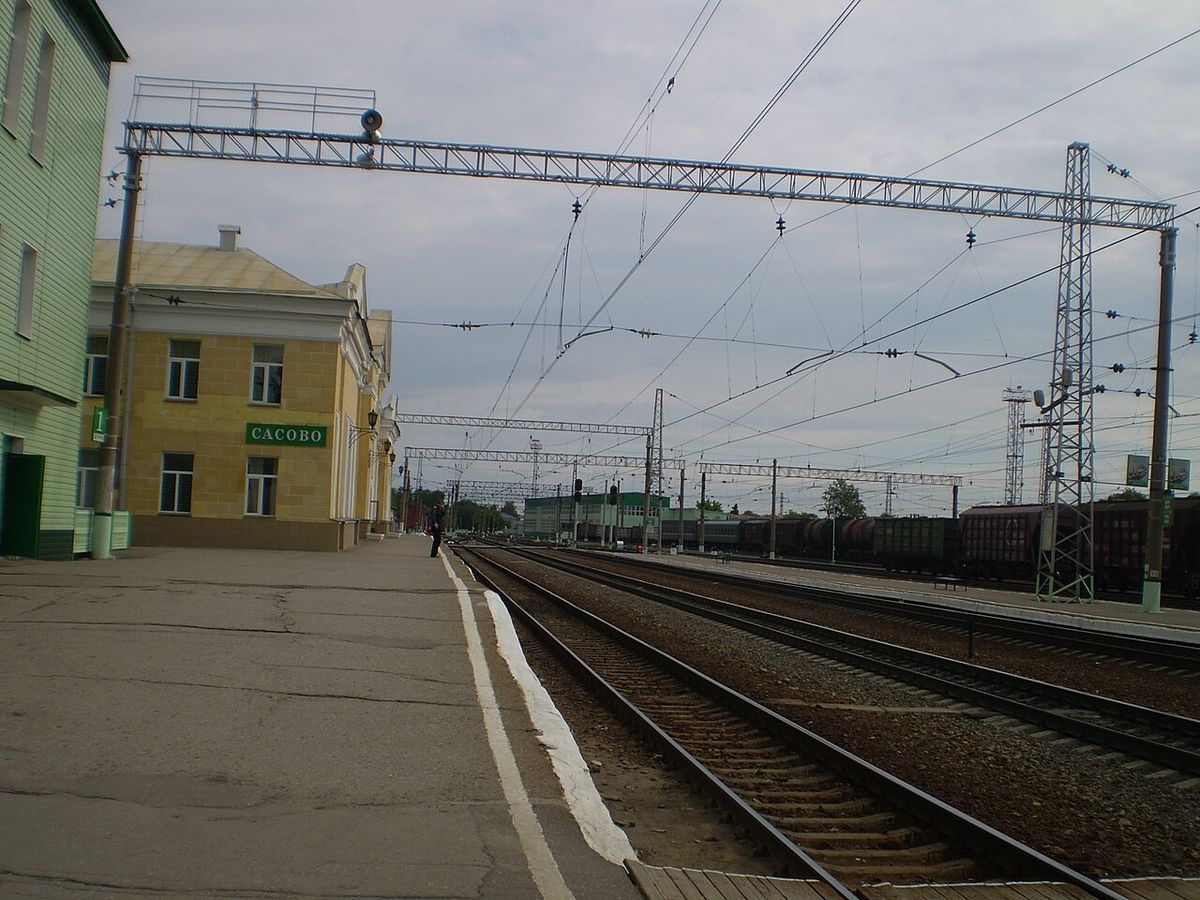
At 1:34 AM on April 12, 1991, the town of Sasovo in Ryazan Oblast of central Russia was shaken by an enormous explosion that blew out windows across a ten-kilometre radius, left thousands of residents temporarily deaf, and carved an 28-metre-wide, 3.5-metre-deep crater in a field outside the town. No aircraft had been operating over the region, no meteorological conditions were reported that might explain the event, and — most puzzlingly — no explosive residues of any known chemical composition were recoverable from the crater site. A nearby warehouse containing 30 tonnes of ammonium-nitrate fertilizer was thrown into the air and scattered over 200 metres, but was subsequently confirmed by Soviet military explosives experts as not the source of the detonation.
The Soviet Academy of Sciences, the KGB, and the Soviet Ministry of Defense opened formal investigations. The initial military hypothesis — that a Soviet Strategic Rocket Force weapon had accidentally detonated — was ruled out by confirmation that no weapons systems had been active in the Ryazan region on the date. Secondary hypotheses — meteorite impact, underground gas explosion, industrial-chemical accident — were each considered and rejected on the basis of the crater's perfect geometry, the absence of fragmentation, and the unusual pattern of damage distribution (which was 'inverted,' with greater damage far from the epicentre than near to it). A second smaller crater appeared near Sasovo on June 24, 1992 under similar circumstances.
The Sasovo explosion has never been officially explained. Russian physicist Professor Alexei Dmitriev of the Institute of Mathematics of the Siberian Academy of Sciences has proposed that the event represented a 'ball-plasmoid' — an unusually large and energetic form of ball lightning — that detonated upon contact with the ground. Other researchers have proposed unusual tectonic discharge, exotic-weapon testing, or, within UFO literature, an unrecovered-craft detonation. The Sasovo crater is one of the most-cited unresolved explosion-crater events in Russian history and remains the subject of active research by the Kosmopoisk organization and Moscow Institute of Physics researchers.