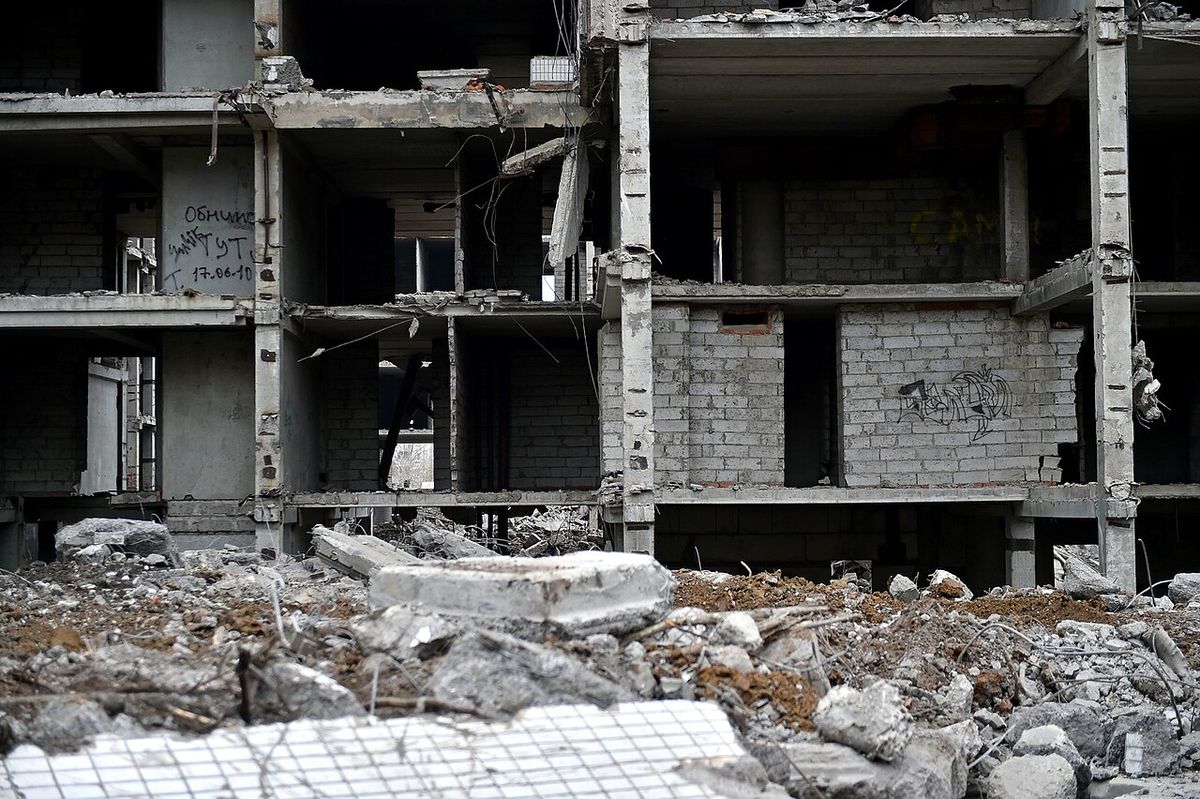
The Khovrinskaya Psychiatric Hospital (Ховринская больница, popularly 'the Umbrella' Умбрелла in its later years) was a massive incomplete medical facility in the northern Khovrino district of Moscow, begun in 1981 and abandoned in 1985 after the collapse of its eastern ground-floor wing due to groundwater infiltration. The structure — never actually opened as a hospital — remained one of Moscow's most distinctive ghost-buildings for more than thirty years, drawn in an unusual three-branched 'biohazard' footprint that from the air strongly resembled an inverted pentagram. The building was finally demolished between 2017 and 2018.
During its three-decade vacancy, Khovrinskaya became the most-investigated urban-exploration site in Moscow. Muscovite teenagers, Kosmopoisk paranormal researchers, and multiple documentary crews reported a consistent pattern of phenomena inside the abandoned structure: sudden crushing pressure in specific stairwells, voices calling in Russian and — unusually — in Old Church Slavonic, apparitions of nurses and patients in period scrubs despite the building having never been operational, and unexplained disturbance of the dangerous groundwater-flooded lower levels. Between 1994 and 2017, Moscow Police recorded at least 23 deaths on the property — mostly from drowning in the flooded basement, falls from the upper floors, or exposure — and more than 100 additional rescued trespassers.
Khovrinskaya's peculiar reputation was amplified by claims that the building had been occupied by a satanic cult called the 'Nemostor' in the late 1980s and 1990s, and that ritual killings had been committed in its lower chambers. Moscow Police have confirmed investigating multiple suspicious deaths at the property but never publicly confirmed cult-activity narratives. The building's 2017–18 demolition generated further paranormal accounts, with construction crews reporting unusual technical failures, unaccountable injuries, and the persistent sense that the site was 'watching.' Khovrinskaya stands as the most-visited urban paranormal landmark of post-Soviet Moscow, and its absence from the skyline is itself a subject of continuing Moscow folk tradition.