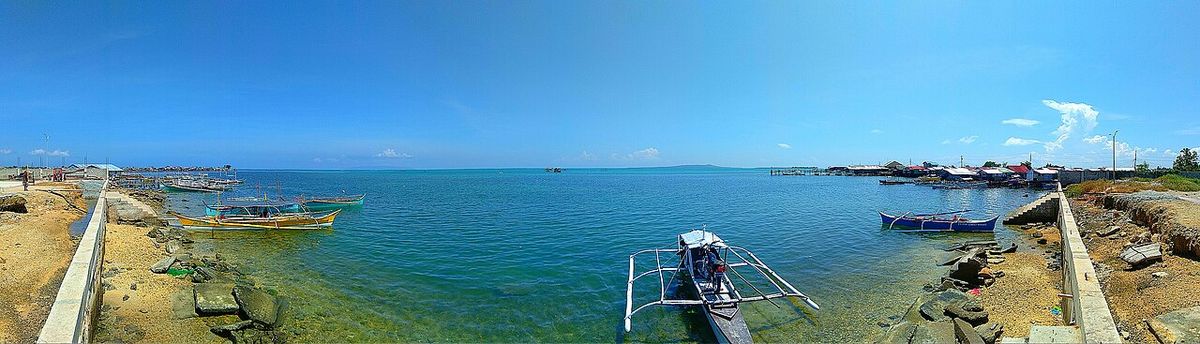
Homonhon Island in the municipality of Guiuan, Eastern Samar, holds a dual significance in Philippine history: it was the first landfall of Ferdinand Magellan's expedition in 1521, the event that began the European colonization of the Philippines — and it is, according to Visayan folklore, an island claimed by engkantos and populated by the spirits of the dead from other islands.
The island's supernatural reputation predates the Spanish arrival. In Waray-Waray tradition, Homonhon serves as a kind of spiritual destination — a place where the dead of other islands are drawn after death, congregating on its shores and in its forests in communities that mirror the towns they left behind. The island functions in Visayan cosmology as a waystation between the world of the living and the realm of the permanently departed, a liminal space where the dead gather before moving on.
When Magellan's fleet anchored off Homonhon in March 1521, the Spanish sailors reportedly encountered phenomena that unnerved the crew. According to accounts that blend historical record with Visayan folk tradition, the visitors saw phantom communities — settlements that appeared on the island's shore and then dissolved, as if the spirit inhabitants were briefly making themselves visible to the newcomers. Some ships in the fleet found their vessels mysteriously unmoored during the night, their anchors dislodged or their ropes cut by unseen hands. Other vessels were reportedly found partially submerged, as if the spirits of Homonhon were attempting to prevent the foreigners from leaving.
The island's role as a threshold between worlds gives the Magellan encounter an additional layer of meaning. The Spanish arrived at Homonhon believing they had discovered a new land; they had, in fact, landed on the Philippines' spiritual border — the island where the dead gathered. The subsequent colonization, with its attendant violence and transformation, may have begun at the one point in the archipelago where the spirits were already watching.