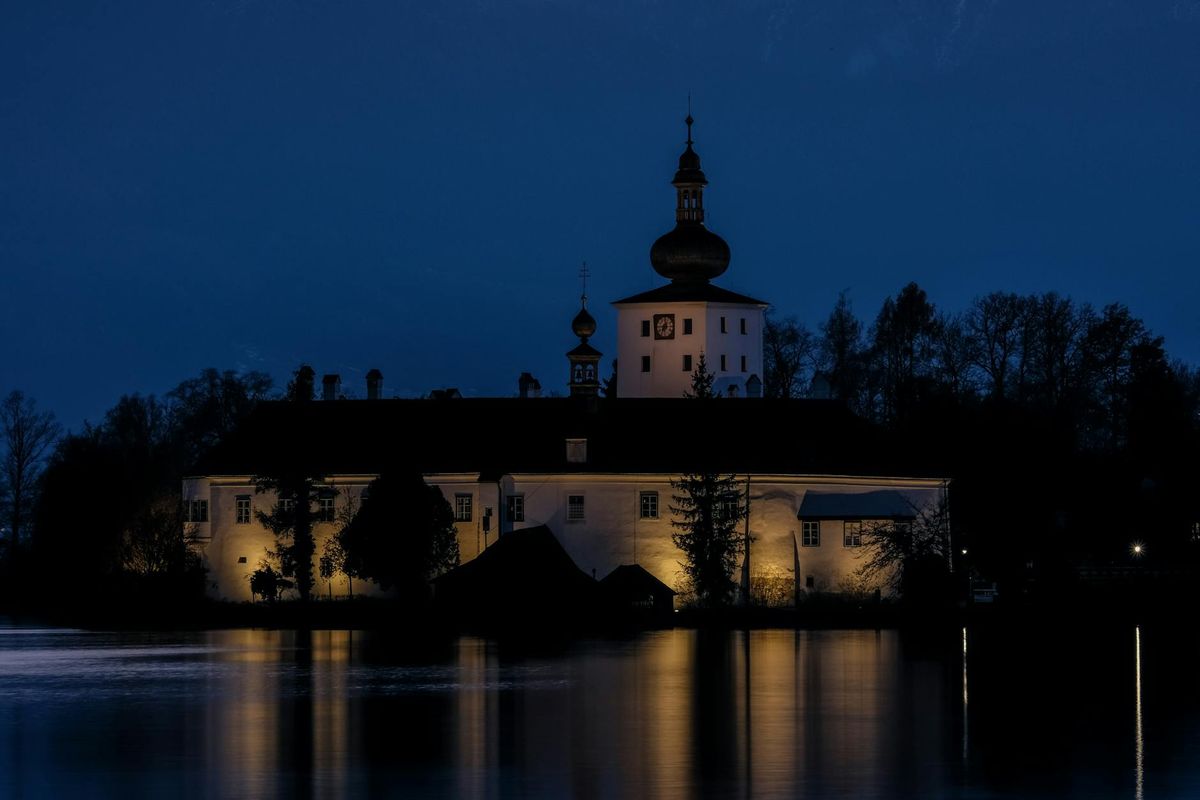
Biringan is the most extraordinary supernatural location in the Philippines — not a haunted house or a ghostly road, but an entire city that appears and disappears between the municipalities of Pagsanghan and Gandara on the island of Samar. According to Waray-Waray tradition, Biringan is a gleaming, modernistic metropolis — described by those who claim to have glimpsed it as more technologically advanced than Manila — that serves as the capital of the engkanto kingdom.
The city is said to materialize at unpredictable intervals, visible from certain vantage points in the forests and mountains of central Samar. Witnesses describe seeing towers of light, structures that shimmer like heat haze, and roads paved with materials that have no earthly equivalent. The city pulses with an inner radiance, particularly at dusk, and produces a low hum that some have compared to the sound of distant machinery.
The most persistent warning about Biringan concerns its portals. Believers maintain that seven gateways to the phantom city are scattered across Samar island, each disguised as an ordinary feature of the landscape — a cave entrance, a clearing in the forest, an old tree. One portal is reputed to be located within the campus of Northwest Samar State University in Calbayog, near an ancient tree that students give a wide berth after dark. Those who stumble through a portal and enter Biringan are said to never return, or to return decades later believing only minutes have passed.
The engkantos of Biringan are not the diminutive nature spirits described in some Filipino traditions. They are described as tall, pale, extraordinarily beautiful beings who dress in fine clothing and speak in melodic voices. They are not inherently hostile, but they are possessive — those who catch their attention may be lured into Biringan with promises of wealth and comfort that prove impossible to refuse.
The legend has permeated Filipino popular culture, inspiring the 2009 horror film T2 directed by Calbayog native Chito Roño and featuring in television specials. But for the communities of central Samar who live in proximity to Biringan's alleged territory, the phantom city is not entertainment — it is a geographical reality that simply operates on rules different from the visible world.