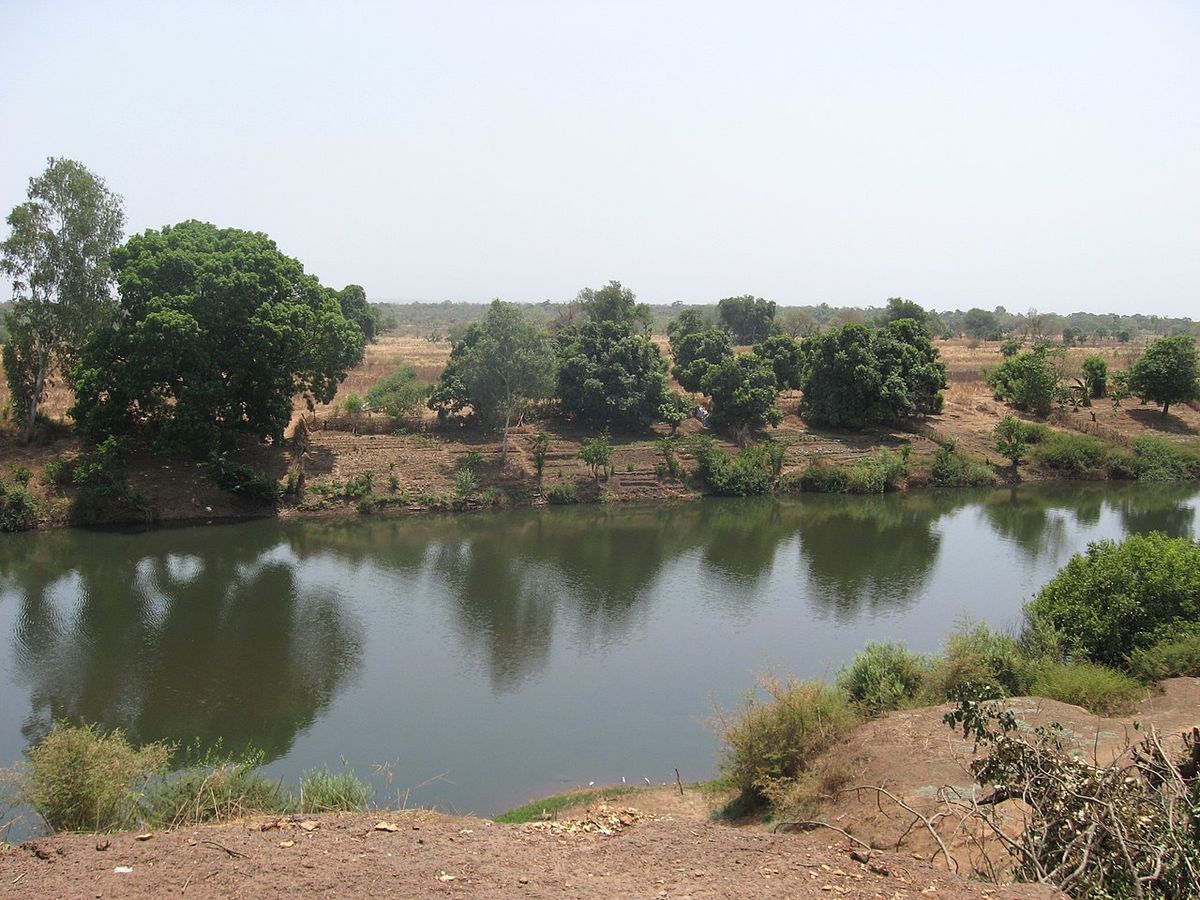
The Ninki Nanka (variously spelled Niŋki Naŋka in Mandinka, Njigi Nanka in Wolof) is the primary cryptid of West African tradition, reported for centuries across the Senegal, Gambia, and Casamance rivers and the adjacent wetlands of Senegal, Gambia, Guinea-Bissau, Guinea, and Mali. Mandinka, Fula, Jola, and Wolof traditions describe Ninki Nanka as an enormous serpent-like creature with a long neck, a horse-like head bearing three horns, feathered or scaled wings, and a body approximately 15 to 30 metres in length. The creature is said to inhabit deep river bends and mangrove-channel systems, to be extremely territorial, and — in multiple traditions — to cause the death of anyone who directly observes it, typically within a few weeks of the sighting.
The twentieth-century European catalog of Ninki Nanka reports is dense. British colonial officials recorded multiple first-person Fula and Jola accounts during the 1920s-1940s. Thomas Dalrymple, District Commissioner of McCarthy Island (Janjanbureh), documented in 1942 an extensive Jola testimony regarding a Ninki Nanka sighting on the Bintang Bolong. In 2006, the Center for Fortean Zoology (CFZ) organized the Gambia River Expedition, led by Richard Freeman, which collected dozens of first-person accounts from Mandinka and Jola informants across six fishing villages. Expedition member and wildlife photographer Chris Moiser recorded an audio testimony from Papa Jinda, a retired fisherman from Kanilai, who in 1960 claimed to have survived a direct Ninki Nanka encounter and bore a scar he attributed to the creature.
Proposed natural identifications include the West African rock python (Python sebae), which exceeds 6 metres but falls short of the reported size; the West African manatee (Trichechus senegalensis), which inhabits the river systems but is slow and mammal-like; or unknown megafauna. The Gambia River basin's dense mangrove cover, tidal dynamics, and significant seasonal flooding produce a habitat that remains among the least-surveyed in West Africa. The Ninki Nanka tradition is formally recognized as intangible cultural heritage by the Gambian Ministry of Youth and Sports; the West African cryptid remains a significant element of Mandinka oral tradition and a subject of ongoing cryptozoological research.