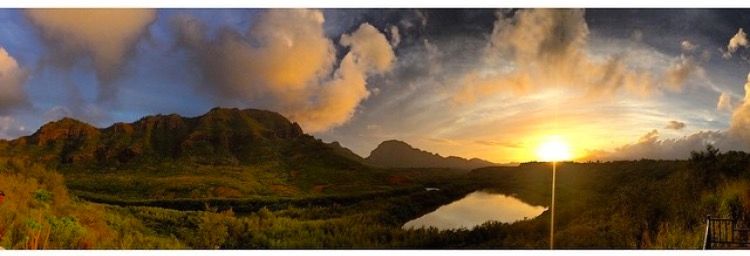
Menehune, in Hawaiian tradition, are a race of small, muscular people three feet tall or less who are said to have inhabited the islands — particularly Kaua'i — before the Polynesian arrival. They are master stonemasons credited with the overnight construction of the 'Alekoko ('Menehune') Fishpond near Līhue on Kaua'i, the Kīkīaola ditch that diverts the Waimea River, and the Haleakalā heiau — all constructed from single-fit stone without mortar, exhibiting a technique found nowhere else in Polynesia. Traditional accounts describe the Menehune as working only at night, disappearing at the first cock-crow, and refusing wages other than a single shrimp per person.
A persistent modern tradition of Menehune sightings in the remote Kaua'i interior goes back at least to the 1820 arrival of American missionaries, who recorded indigenous accounts of the creatures in the upper Kalalau Valley and the Alakaʻi Swamp — the highest rainforest in the Pacific. In 1820, an official census conducted by Kaua'i governor Kaikio'ewa listed 65 Menehune residents of Wainiha Valley, a return that has been variously interpreted as evidence of an actual dwindling population or as a playful response from census subjects. Anthropologist Katharine Luomala in 1951 catalogued hundreds of collected testimonies about Menehune; hikers in the Alakaʻi continue to report small humanoid figures at the edges of clearings, brief flute music from deep forest, and stone arrangements appearing overnight along disused trails.
Whether the Menehune represent a genuine Pre-Polynesian population — some ethnographers have suggested pygmy-like descendants of an earlier Marquesan wave, subsequently absorbed or retreated — or a purely folkloric tradition, the archaeological record contains unexplained features. The 'Alekoko Fishpond's 900-foot lava-rock wall, precisely fitted, is the most celebrated piece of evidence. Modern Hawaiian cultural practitioners regard the Menehune not as quaint fairy folk but as actual beings, and offerings are still left at the fishpond and the Menehune Ditch near Waimea.