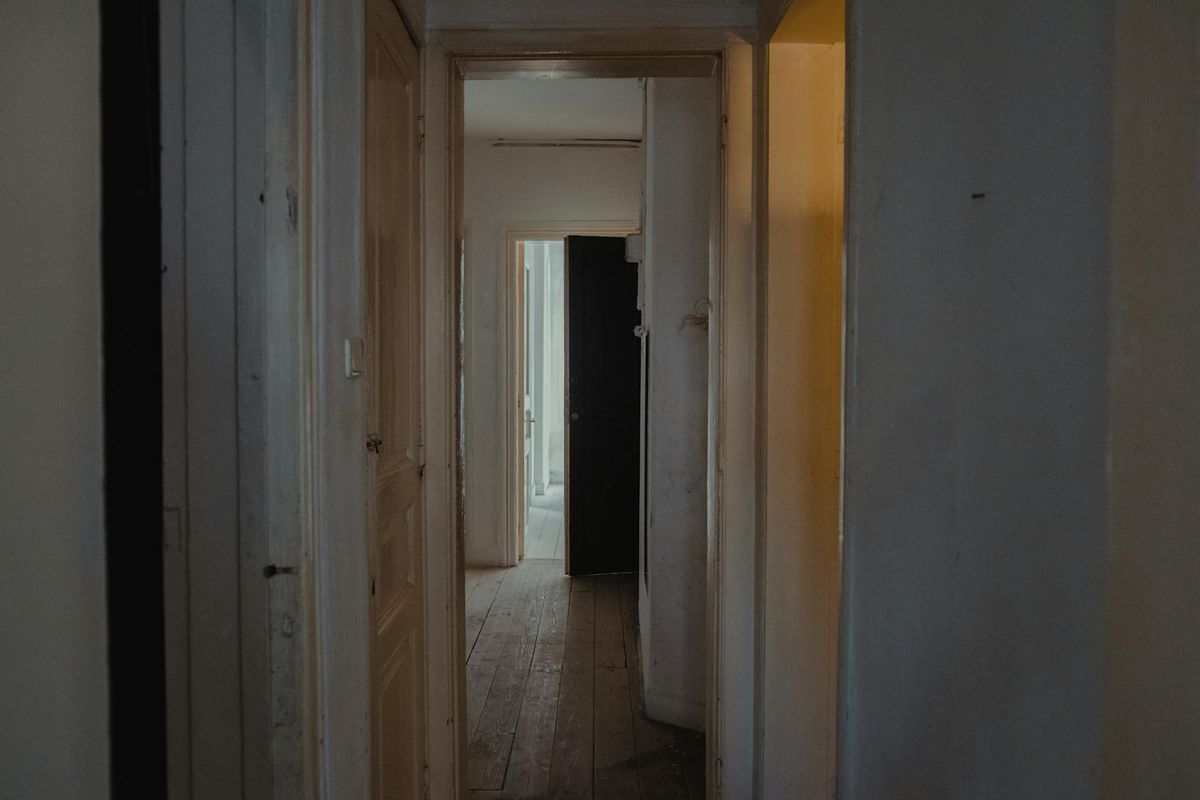
In August 1977, a council house at 284 Green Street in the London borough of Enfield became the epicenter of one of the most extensively documented poltergeist cases of the 20th century. The disturbances centered on the Hodgson family — a single mother, Peggy, and her four children — and lasted for over eighteen months, attracting police officers, journalists, photographers, and investigators from the Society for Psychical Research.
The activity began with knocking sounds and furniture moving on its own. Within days, the phenomena escalated dramatically. Heavy chests of drawers were reported sliding across rooms, toys and household objects flew through the air, and the children's beds shook violently. Police officers who attended the house witnessed a chair slide across the floor of its own accord — an incident documented in an official police report. Photographer Graham Morris captured images of eleven-year-old Janet Hodgson apparently levitating above her bed and being thrown across the room by an unseen force.
The case's most controversial element was the voice. Janet began speaking in a deep, gravelly male voice that identified itself as "Bill" — later connected to a man named Bill Wilkins who had died in the house years earlier. Skeptics noted that the voice could be produced by a technique called false vocal fold phonation, and some investigators concluded the children were responsible for at least some of the phenomena. Maurice Grosse and Guy Lyon Playfair of the SPR, who spent months in the house, maintained that while some incidents were faked, the majority were genuine. The case generated over 1,500 documented incidents, thirty witnesses, and hundreds of hours of recorded audio. It remains one of the most debated poltergeist cases in history and inspired multiple films and documentaries.