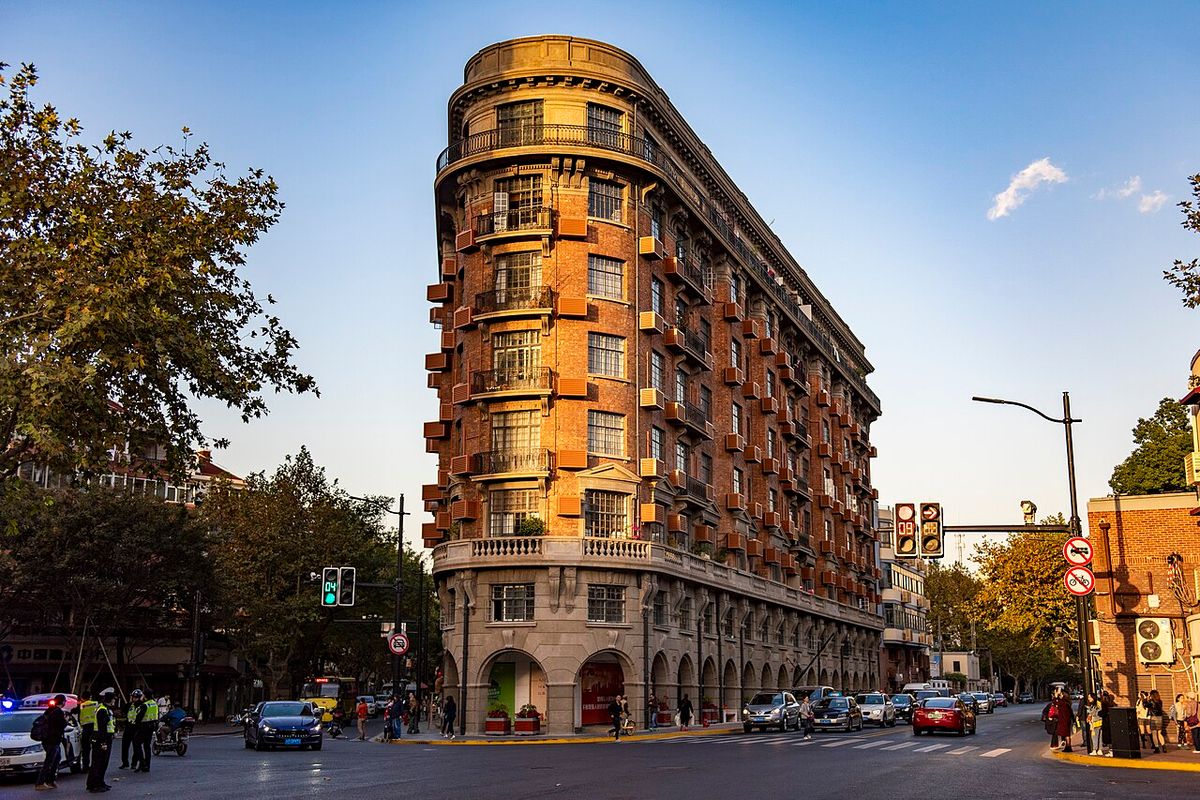
The Wukang Mansion (formerly known as the Normandie Apartment) in Shanghai is an iconic 1924 Art Deco apartment building designed by Hungarian-Slovak architect László Hudec. The building, shaped like a ship's bow and listed as a protected heritage structure, has a dark reputation connected to suicides during the political turmoil of the mid-20th century. During the Cultural Revolution (1966-1976), several residents of the building reportedly threw themselves from the upper floors rather than face persecution by Red Guards. Some accounts describe the spirits of these victims haunting the building — residents have reported hearing footsteps on the landings, doors opening and closing, and the apparition of a figure falling past their windows, only to find no body on the street below.
The building's distinctive architecture — with its curved façade, wrought-iron balconies, and mansion-style roof — makes it one of Shanghai's most photographed landmarks, and the contrast between its architectural beauty and its dark history creates a complex emotional experience. In Chinese culture, those who die by suicide are believed to become restless spirits who may be trapped at the site of their death, unable to move on to the afterlife.