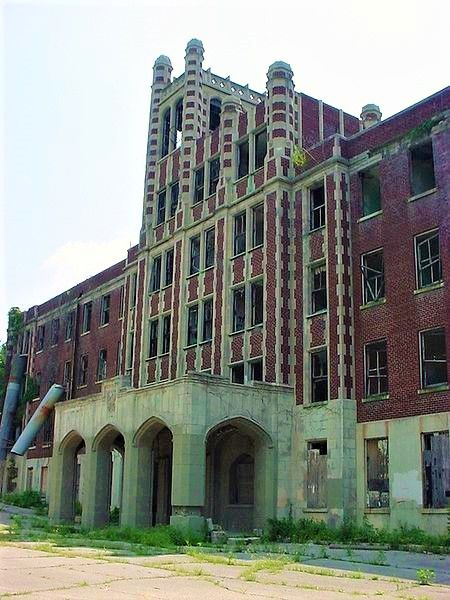
Waverly Hills Sanatorium, perched on a hilltop in southern Louisville, Kentucky, opened on July 26, 1926 to combat the 'white plague' of tuberculosis that was sweeping through Kentucky at rates among the worst in the United States. Designed as a state-of-the-art facility with five floors, solariums, pavilions, and generous outdoor terraces to allow sun and fresh-air therapy, the sanatorium could care for more than four hundred patients at a time. Before the introduction of streptomycin in 1943, tuberculosis was almost always fatal, and over the course of its operation as a tuberculosis facility — from 1910 at the original wooden building through its 1926 rebuild to its closure as a sanatorium in 1961 — tens of thousands of patients died on its wards. The hospital archive quotes a figure of 63,000 deaths, though later historians have revised that number downward to a still-staggering 8,000 to 9,000.
Bodies were moved from wards to the morgue using a long underground tunnel descending from the basement down the hillside, informally known as the 'body chute' or 'death tunnel,' in order to conceal the frequency of deaths from the patients who could still see. After 1961 the building served as the Woodhaven Medical Services nursing home until its closure in 1981 following allegations of neglect and abuse.
The building then stood derelict for two decades. Visitors, urban explorers, and paranormal investigators reported the figure of a young woman in white seen on the fifth floor, the cries of a child named 'Timmy' reportedly heard in Room 502 — the alleged site of two nurses' suicides — the silhouette of a 'creeper' that hunches along the walls of the fourth floor, and phantom gurneys heard rolling down empty corridors.
In 2001 the site was purchased by the Mattingly family, restored, and opened for historical tours and overnight paranormal investigations. Waverly Hills has been featured on Ghost Adventures, Ghost Hunters, and Most Haunted, cementing its place among the most prominent haunted hospitals in America.