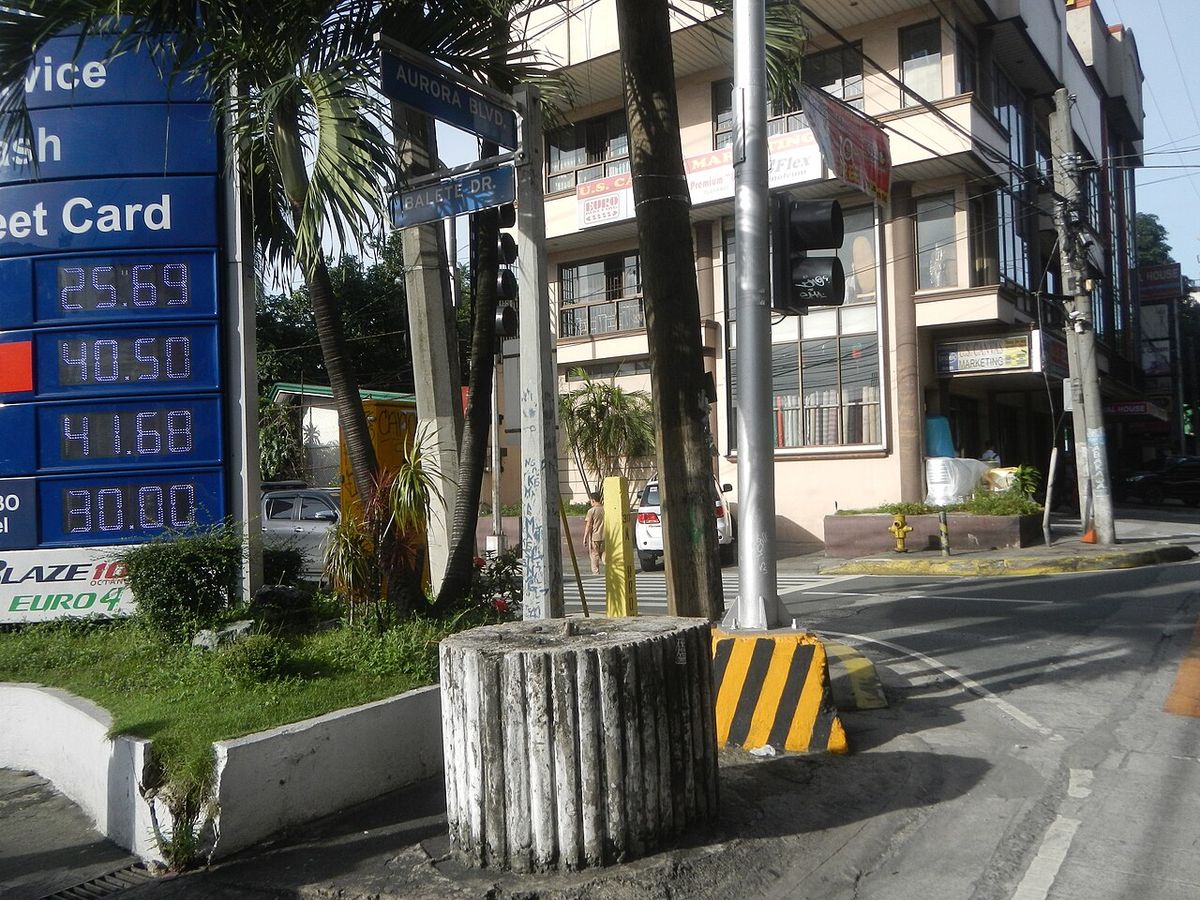
Balete Drive in New Manila, Quezon City, is the most famous haunted street in the Philippines — a name synonymous with supernatural terror that has permeated Filipino culture for over seven decades. The long, tree-lined residential avenue is known as the domain of a white lady whose apparitions have been reported by hundreds of witnesses since the late 1940s, making her arguably the most-sighted ghost in Southeast Asian history.
The white lady of Balete Drive appears most commonly to motorists driving alone at night. She materializes in the rearview mirror — a woman with long black hair, deathly pale skin, and a white dress, seated in the back seat of a vehicle she never entered. Some drivers describe her face as beautiful but expressionless; others report that her features are horribly disfigured, as if she had been beaten or involved in a violent accident. The encounter typically lasts only seconds before the figure vanishes, but the psychological impact on witnesses has been described as life-altering.
Two competing origin stories have circulated for decades. The more widely known version identifies the white lady as the ghost of a teenage girl who was raped and murdered by a taxi driver sometime in the 1950s, her body dumped along the tree-lined avenue. The second version, which has its own body of believers, identifies her as the 19-year-old granddaughter of Senator Claro M. Recto who died in a 1949 car accident while joyriding with friends along the street.
Both narratives share the same core elements: a young woman's violent or sudden death on the avenue, and her spirit's refusal to leave the site of her demise. The white lady of Balete Drive has transcended the category of local ghost story to become a national cultural figure — referenced in films, television shows, literature, and everyday conversation. Taxi drivers in Metro Manila still share stories of colleagues who picked up passengers on Balete Drive only to discover their fare had disappeared, leaving behind nothing but a cold spot on the upholstery.
The balete trees that give the street its name — massive, tangled fig trees sacred in Filipino supernatural belief — create a natural canopy that plunges parts of the avenue into deep shadow even during the day. At night, the avenue takes on a primordial quality that makes the appearance of a ghost feel not like an intrusion on reality but like reality briefly revealing what has always been there.