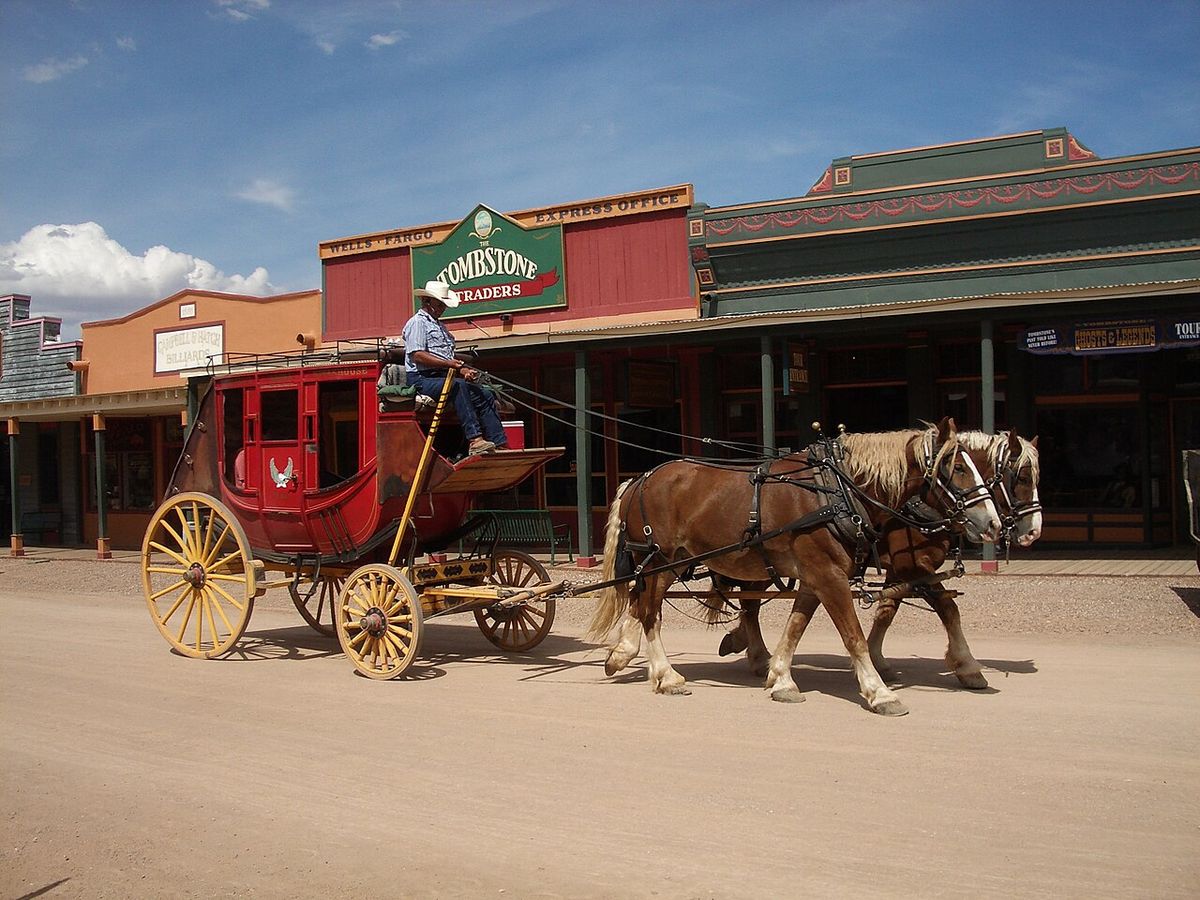
One of the most tantalizing mysteries in cryptozoological history involves a photograph allegedly published in the Tombstone Epitaph in April 1890, showing a group of men standing alongside the carcass of an enormous bird-like creature with a wingspan described as ranging from twenty to thirty-six feet. According to the legend, a party of ranchers or prospectors in the Arizona desert encountered and killed a massive, pterodactyl-like flying creature, after which the photograph was taken. The story has been repeated in countless cryptozoological books and articles, with many researchers and writers claiming to have seen the photograph at some point before being unable to relocate it. Despite exhaustive searches of the Tombstone Epitaph's archives, no such photograph has ever been found.
The Epitaph did publish a brief notice on April 26, 1890 describing the killing of a large flying creature in the desert, but it contained no photograph and the description was far less dramatic than later retellings. The 'Thunderbird photograph' has become a case study in false memory and the Mandela Effect — the widespread phenomenon of large groups of people sharing a specific false memory. Researchers including Jerome Clark and Loren Coleman have documented their own vivid but apparently false memories of having seen the photograph.