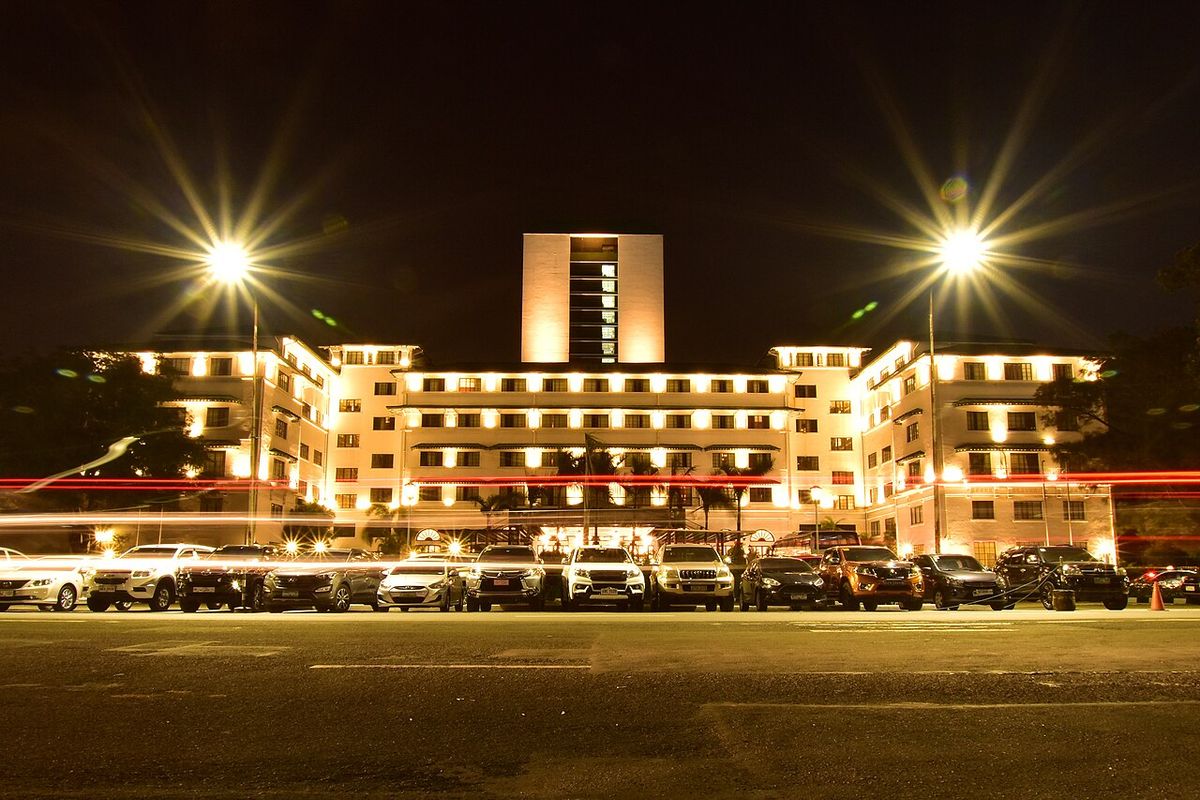
The Manila Hotel, the grand dame of Philippine hospitality since its opening in 1912, has hosted presidents, generals, movie stars, and — according to staff and guests — at least one permanent resident who checked out of life but never checked out of the hotel. The spirit of a suicide victim who fell from the 15th floor is said to haunt the upper stories of the building, accompanied by poltergeist phenomena that manifest as lights and air-conditioning systems operating on their own.
The Manila Hotel occupies a position of singular prestige in Philippine history. General Douglas MacArthur maintained a penthouse suite in the building during his tenure as military adviser to the Commonwealth government. During the Japanese occupation, the hotel served as headquarters for Japanese military command. The Battle of Manila in 1945 damaged the building significantly, though it was rebuilt and restored to its pre-war grandeur.
The suicide that gave rise to the primary haunting is not publicly documented in the hotel's official history — understandably, luxury hotels do not advertise the deaths of guests. But staff members, particularly those who work the upper floors and the night shift, have maintained the story for decades. The ghost is said to appear in the corridors of the upper stories: a figure who walks purposefully toward the area where the fall occurred and then vanishes.
The self-operating equipment is a distinct phenomenon. Rooms that have been confirmed as unoccupied have their lights switch on and off during the night, and air-conditioning units turn on at full blast in sealed, empty rooms — running up energy costs that the hotel's management has never been able to eliminate through electrical inspection or system replacement.
The Manila Hotel's combination of age, historical weight, and the accumulated emotional energy of over a century of human drama makes it a natural candidate for supernatural activity. Every room in the building has hosted hundreds or thousands of guests, each carrying their own joys, sorrows, and — in at least one case — the despair that led to a final, irreversible act.