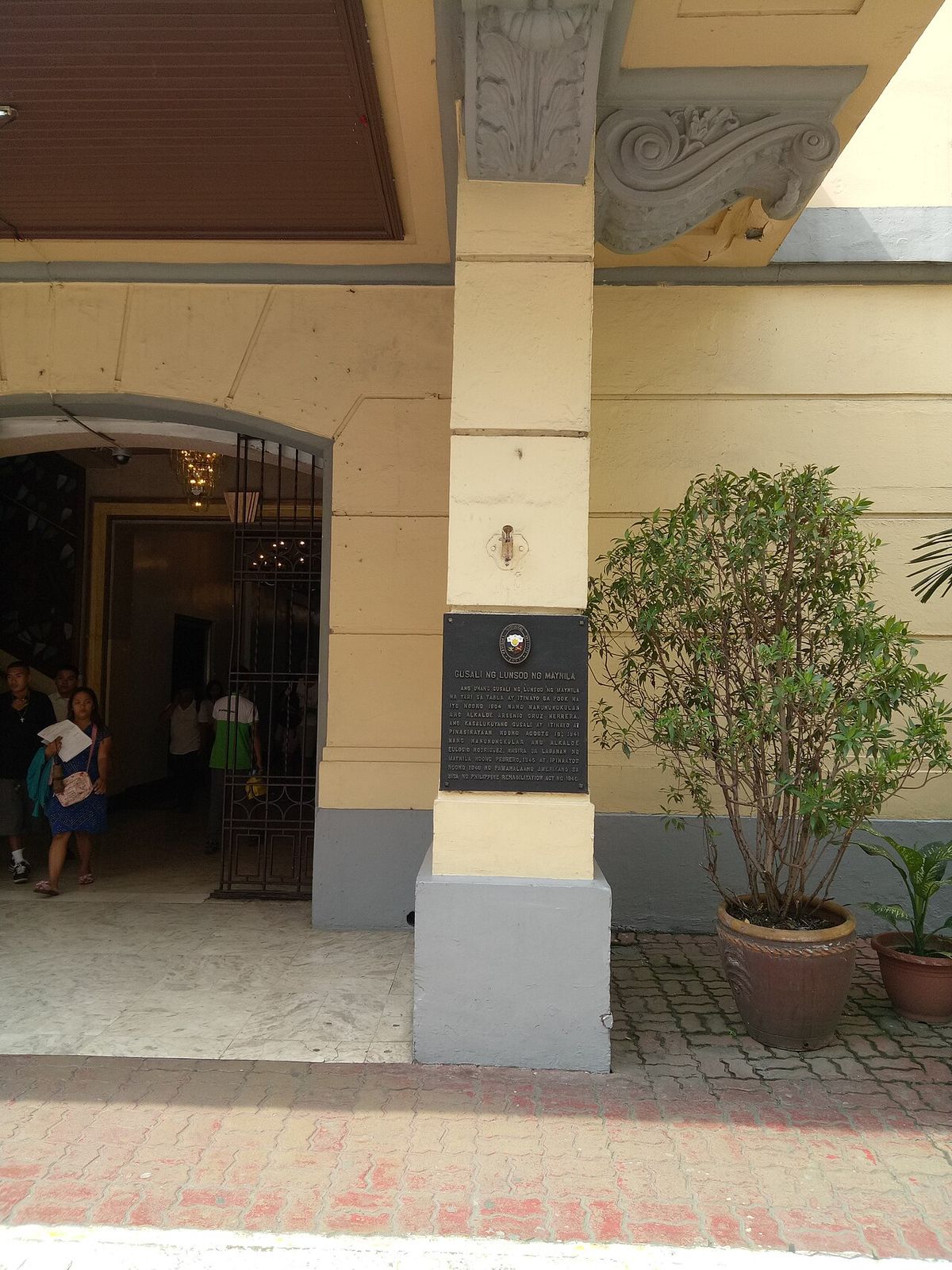
Manila City Hall, the seat of government for the Philippine capital, is haunted by specters that roam its corridors after 6:00 PM — and the building itself, when viewed from above, is shaped like a casket. Whether the architectural resemblance is coincidental or prophetic, it has become central to the building's supernatural reputation among the city employees who work within its walls.
The hauntings are concentrated in the clock tower, the building's most prominent architectural feature. Security guards and maintenance workers who access the tower after hours report encounters with figures in Japanese military clothing, a woman believed to have died on the premises during World War II, and unexplained phenomena that paranormal investigators who have examined the site classified as both poltergeist activity and residual hauntings.
Manila City Hall was completed in 1941, just months before the Japanese invasion. During the occupation, the building was appropriated by the Japanese military administration. During the Battle of Manila in February 1945, the area around City Hall saw intense fighting as Japanese forces made their final, suicidal stand against American liberation forces. The building survived the battle, but the violence that occurred in and around it left the kind of spiritual imprint that Filipino supernatural tradition considers permanent.
The paranormal investigations conducted at Manila City Hall confirmed what employees had long reported: cold spots in the clock tower, unexplained sounds of military activity, the electromagnetic anomalies often associated with spirit presence, and the distinct feeling of being watched in specific areas of the building. The investigators classified the Japanese-era apparitions as residual hauntings — echoes of events that replay automatically — and the woman's spirit as potentially intelligent, responding to the presence of the living.
City employees have adapted to the hauntings with the pragmatism characteristic of Filipino civil servants. Work schedules are arranged so that few people remain in the building after dark, and the clock tower is generally avoided after hours. The casket-shaped building continues to function as the administrative heart of Manila during the day, yielding its corridors to other occupants when night falls.