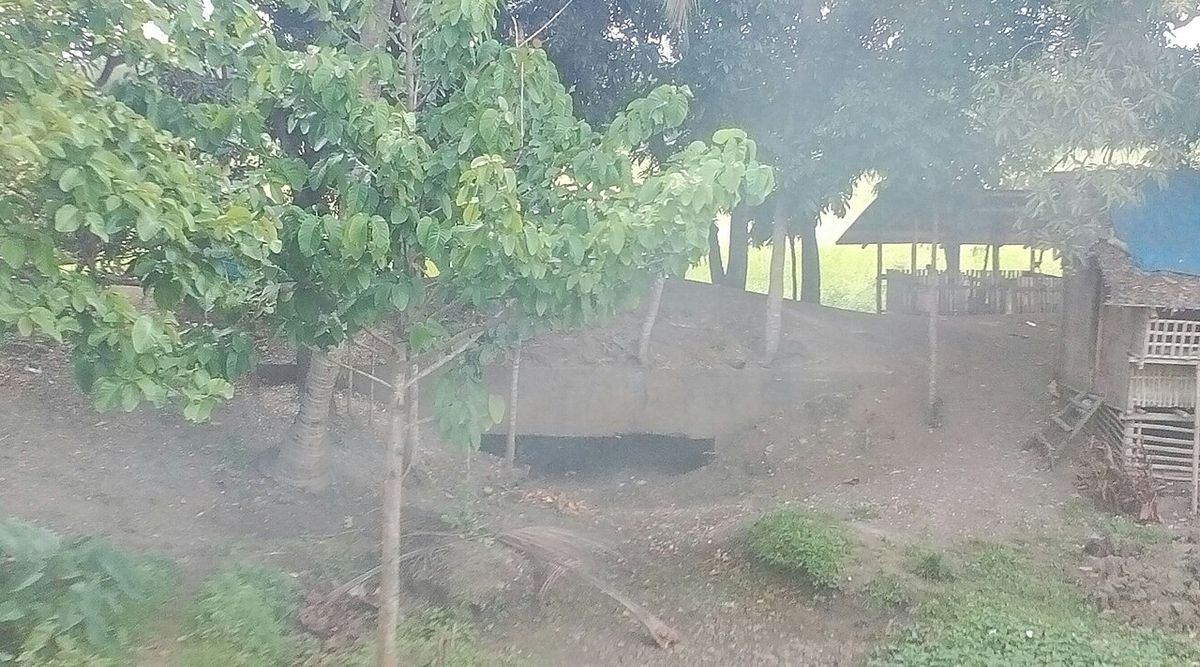
At the old bridge known as Taytay Guba in the municipality of Pototan, Iloilo, a spectral vessel makes its passage through the waters below — a ghost ship crewed by dead pirates from the Spanish colonial era that, according to legend, has been damaging the bridge for generations.
The ship is said to appear at night, materializing on the river beneath the bridge with its sails full despite the absence of wind. Its crew — skeletal or shadowy figures in the clothing of 18th-century raiders — work the rigging in silence. The ship passes beneath the bridge with a grinding impact that witnesses describe as both audible and felt through the bridge's structure, as if the ghostly vessel were physically colliding with the pilings.
Local legend attributes the bridge's perpetual state of disrepair to this phantom ship. No matter how often Taytay Guba is repaired, the damage returns, and each new instance of structural deterioration is ascribed to another nocturnal passage of the ghost ship. The bridge's name itself — "guba" means "ruined" or "broken" in Hiligaynon — codifies its identity as a structure that can never be fully made whole.
The Iloilo region was heavily targeted by Moro raiders during the Spanish colonial period. Pirate fleets from Mindanao and Sulu regularly attacked the coastal and riverine communities of Panay island, taking captives for the slave trade and plundering towns and churches. The rivers of Iloilo served as invasion routes for these raiders, whose shallow-draft vessels could penetrate far inland.
The ghost ship of Taytay Guba may be an echo of these raids — a spectral remnant of the centuries of violence that defined the relationship between the Christianized communities of the Visayas and the Moro raiders who terrorized them. The pirates continue their passage along the river, their ship continuing to break what the living continue to build, in an eternal cycle of destruction that transcends death.