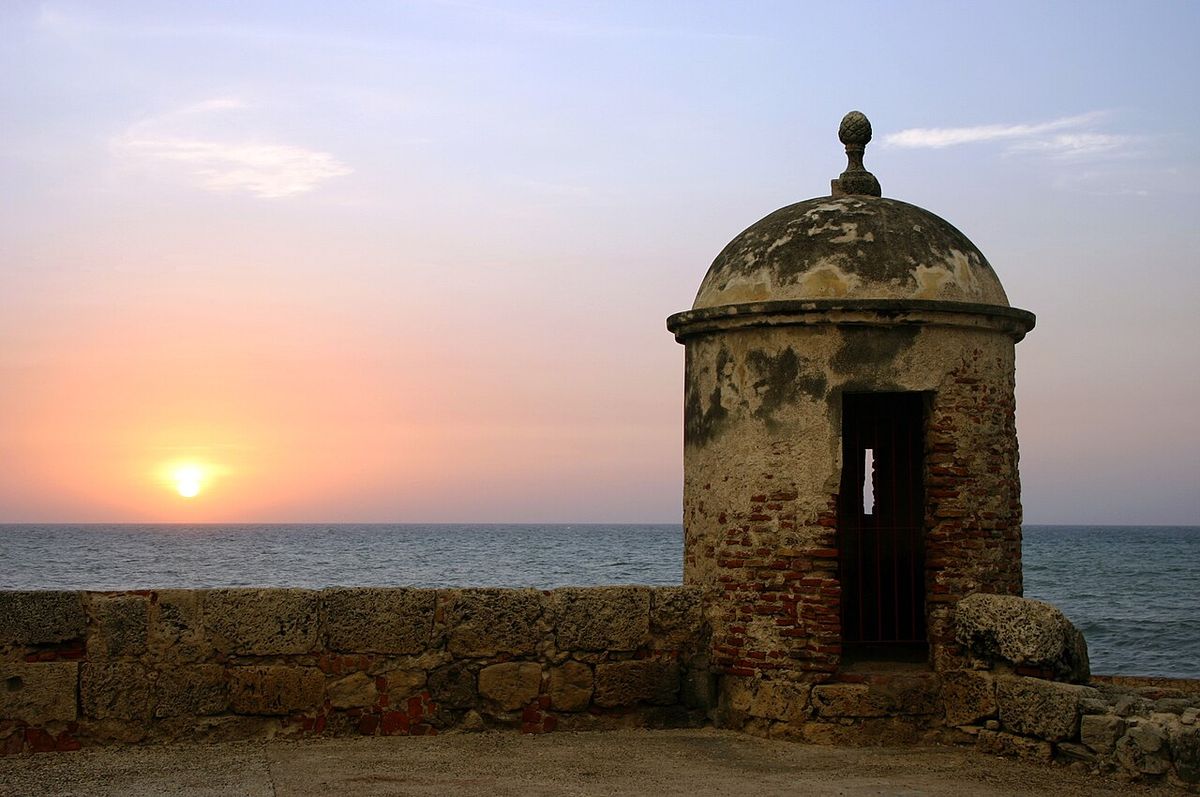
The fortified walls of Cartagena de Indias on Colombia's Caribbean coast, built by Spanish colonial authorities between 1586 and 1648 to defend the city from English and French pirate assaults, enclose an Old City whose UNESCO World Heritage designation is matched by one of the densest concentrations of paranormal reports in Latin America. Cartagena was the principal port of entry for enslaved Africans into colonial Spanish America — more than one million Africans passed through the city's slave markets between 1570 and 1810 — and simultaneously the site of the largest Spanish Inquisition tribunal in the New World, which operated from the Palacio de la Inquisición from 1610 until 1819 and tortured and executed hundreds of accused witches, Jews, and heretics.
The Palacio de la Inquisición itself — today a museum preserving the original torture instruments — is the focal point of Cartagena's ghost tradition. Museum staff, tour guides, and visitors report consistent phenomena: cold spots in the interrogation chamber, the sound of women's voices praying in Ladino in the basement cells, sudden drops in barometric pressure during tours, and the persistent impression of being watched in the central courtyard where public burnings were conducted. The adjacent Plaza de Bolívar and the Iglesia de San Pedro Claver (where the Jesuit 'Apostle of the Slaves' Pedro Claver ministered to Africans disembarking at the docks) produce additional reports of enslaved-ancestor apparitions, with a particularly consistent tradition of a young African woman in chains observed at dawn at the church's entrance.
Other hotspots include the Castillo de San Felipe de Barajas, a massive seventeenth-century coastal fortress whose underground tunnels produce continuous reports of soldiers' voices in Spanish and of footsteps walking the magazine corridors; the Boca Grande hotel zone, built over a former leper hospital; and the Teatro Adolfo Mejía, said to host the figure of a Caribbean opera singer who died on its stage in 1911. The layered trauma of slavery, the Inquisition, repeated siege, and the city's ongoing vibrancy have given Cartagena a paranormal character rivaled in the hemisphere only by Salvador de Bahia and Lima.