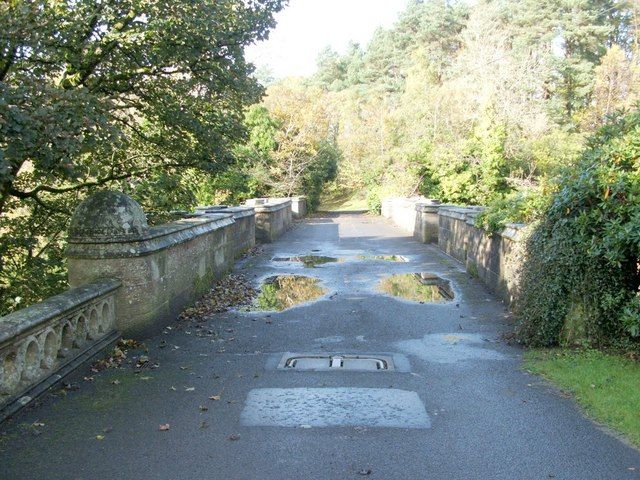
Overtoun Bridge is a Victorian-era stone arch bridge that spans the Overtoun Burn in the grounds of Overtoun House, near Dumbarton in West Dunbartonshire, Scotland. Built in 1895 and standing approximately fifty feet above the rocky gorge below, the bridge has gained worldwide attention for a disturbing and unexplained phenomenon: dogs walking across it have, on at least fifty to six hundred documented occasions since the 1950s, suddenly and inexplicably leaped over the parapet to their deaths on the rocks below.
The pattern is consistent. Almost all the dogs have been long-nosed breeds, particularly Collies, Labradors, and Retrievers. They tend to jump from the last few yards on the right-hand side when approaching the house. The jumps occur in clear, dry weather. Many dogs that survive the fall are reported to climb back up, only to leap again. The incidents have not been associated with any particular time of year or time of day, and the behaviour is not seen on other bridges in the region.
Local folklore attributes the deaths to the legend of the White Lady — the spirit of Lady Overtoun, widow of the First Baron Overtoun, who is said to haunt the grounds after his death in 1908 — and to the region's long association with the thin-places concept of Celtic folklore. Scientific hypotheses developed during investigations by animal-behavior specialists David Sands and Dr. David Sexton have centered on the dense population of male mink in the burn below the bridge; the scent from mink anal glands is extraordinarily strong and may be irresistible to hunting breeds, which attempt to reach the source by taking the most direct downward route. Other investigators point to the acoustic geometry of the bridge arches, which may distress some dogs.
The phenomenon has been documented by BBC, National Geographic, and Scottish SPCA investigators. Signs now warn pet owners to keep dogs on leads. Whatever the cause, Overtoun Bridge remains one of the most scientifically studied and inexplicable animal-behavior mysteries in the world.