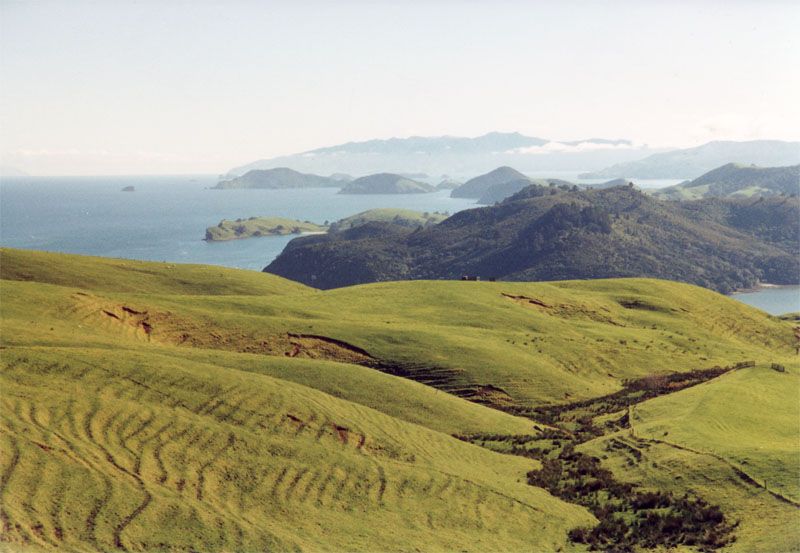
The Moehau Man (sometimes called the Maeroero or, in older Māori tradition, the Maero) is a bipedal, hair-covered hominid reported for more than a century in the Moehau Range at the northern tip of the Coromandel Peninsula, North Island, New Zealand. Māori oral tradition among the Ngāti Tamaterā, Ngāti Maru, and Ngāti Porou describes the Maero as red-eyed hairy wild people of the deep bush who carry long sharpened nails, hunt by ambush, and occasionally kidnap women from coastal kāinga. Accounts were widespread at the time of European contact in the early nineteenth century, and the Moehau Range in particular was considered a no-go zone after dark.
The modern European catalog of sightings dates from the 1870s. In 1882, gold-field worker Henry Harris reported a six-foot 'man covered in coarse dark hair' crossing a bush track above Port Jackson; he and two companions fired at it and missed. In 1903, a prospector working near the Papaaroha Stream was found dead with what a coroner described as 'marks as of a hand with long claws' about his throat; the death was officially attributed to a native bird attack but local Māori attributed it to a Maero. In 1966, three trampers on the Moehau summit track reported being chased off the ridge by a large bipedal animal, and in 1972 a Thames farmer reported his dogs killed overnight by something that left 'enormous barefoot prints' in the mud.
The Moehau Man remains one of the Southern Hemisphere's best-sustained cryptid traditions. Ngāti Tamaterā representatives periodically declare portions of the Moehau Range rāhui (prohibited) for traditional cultural reasons that are not always publicly articulated. New Zealand's Department of Conservation has recorded several unusual track finds in the upper Moehau Forest sanctuary but attributes them to feral goats or wild pigs. The Maero tradition, overlapping the non-anthropological Patu-paiarehe (pale-skinned forest fairy folk) tradition of Māori mythology, gives New Zealand two parallel humanoid cryptid traditions rooted in pre-European culture.