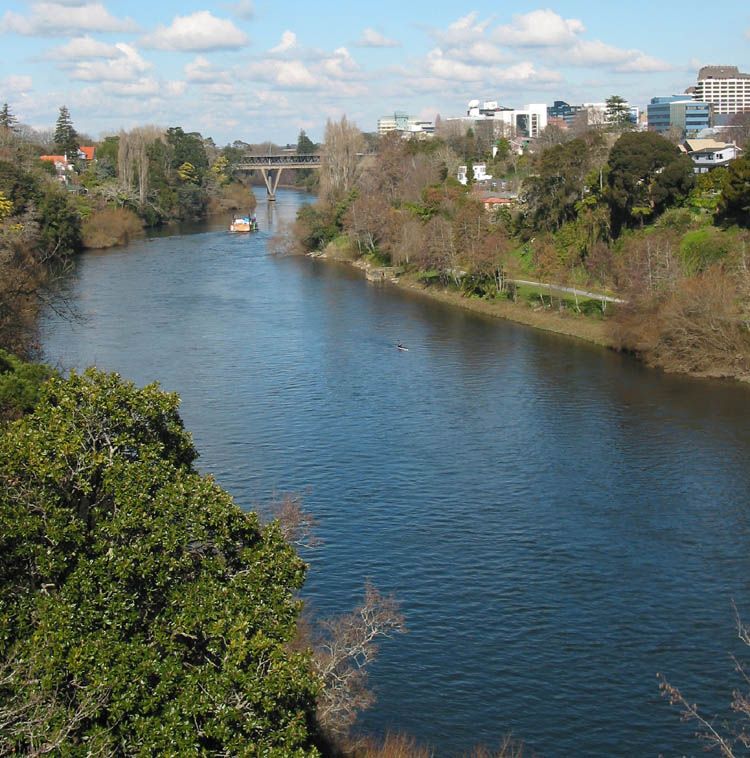
Taniwha are supernatural beings of Māori tradition, inhabiting specific rivers, lakes, harbours, caves, and coastal waters across the North and South Islands of New Zealand. Each Taniwha has its own name, genealogy (whakapapa), and territorial boundary, and is associated with a specific iwi or hapū as either kaitiaki (guardian) or — in cases where tapu has been breached — as an active danger. The tradition is not folklore in the sense of picturesque story: Taniwha are still legally and politically consequential in modern New Zealand, with the 2002 Meremere section of the Waikato Expressway re-routed at a cost of $11 million to avoid the lair of the Waikato Taniwha Karutahi, and the 2011 Auckland commuter-rail tunnel plans adjusted to placate Horotiu the Taniwha of Queen Street.
The most celebrated Taniwha include: Horotiu, who is said to flow beneath central Auckland and whose disturbance was cited in the 1987 Queen Street office-tower development consultation; Ureia, the great Taniwha of the Hauraki Gulf who in Ngāti Paoa tradition was betrayed and killed on Waiheke Island; Tuhirangi, who escorted Captain Cook's Endeavour through Cook Strait in 1770 (or so tradition holds); and Tunuiarangi of Lake Te Anau in Fiordland, reputed to be responsible for the sudden upwellings and temperature anomalies in the lake's Middle Fiord. Many Taniwha are described as water-dragons or enormous eels; others as logs that occasionally move, or as men who can take the form of a shark.
Modern Taniwha sightings continue to be reported. In 2003, fishermen in the Waitematā Harbour reported a long dark form moving beneath their boat; in 2014, Ngāti Paoa kaumātua performed a karakia at Waiheke's Maunganui Point to settle Ureia after a building-boom earthquake. New Zealand law has repeatedly been obliged to acknowledge Taniwha claims through the Treaty of Waitangi framework and the Resource Management Act. Taniwha represent the most integrated example in the Anglosphere of indigenous paranormal tradition maintaining ongoing legal and geographical relevance.