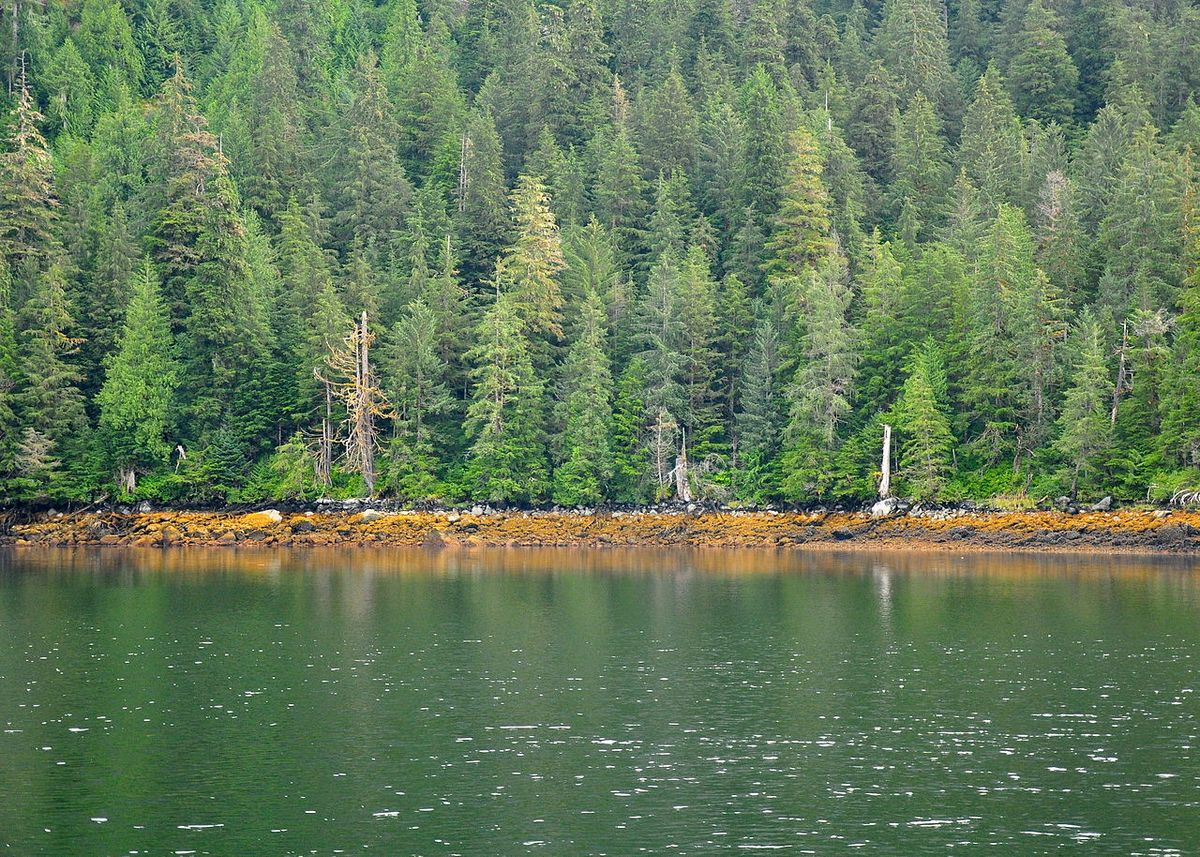
Southeast Alaska — from Prince of Wales Island in the south to Yakutat Bay in the north — has produced a dense cluster of Sasquatch reports stretching back into Tlingit and Haida oral tradition, where the creatures are called Kushtaka in certain contexts or Goo-teekh-yaat in others. The modern catalog begins in 1920 with logger Albert Petka's shotgun encounter near what is now Hydaburg, and includes dozens of reports filed with the Alaska Department of Fish and Game during the 1970s and 1980s from trappers working the western shore of Prince of Wales Island. In 1974, a U.S. Forest Service crew surveying timber near Hydaburg reported being paced by a tall bipedal creature at dusk; they recovered a hair sample that was later inconclusively identified as 'primate-like.'
In October 2011, a photographer near Ketchikan submitted a series of images to the Alaska Monsters television production company purporting to show a Sasquatch crossing a clearcut on Revillagigedo Island. The BFRO (Bigfoot Field Researchers Organization) has catalogued more than 40 reports in Southeast Alaska, making the panhandle one of the densest cryptid-sighting corridors in North America. Biologists point to the rainforest's extraordinary biomass — Sitka spruce and western hemlock growing to 250 feet, an abundance of salmon runs, and nearly unbroken forest from the coastline to British Columbia — as a plausible habitat for an undiscovered primate, though no physical specimen has ever been produced.
Tlingit oral traditions from Sitka and Ketchikan describe Goo-teekh-yaat as a being that whistles from the ridgelines at night, mimics the voices of missing relatives, and occasionally carries off children. These accounts pre-date European contact, preserved in totem imagery and winter-house-door carvings. The convergence of Indigenous tradition, modern trapper accounts, and repeated camera-trap anomalies makes Southeast Alaska — more than the Pacific Northwest proper — the most credible Sasquatch territory in North America according to many cryptozoologists.