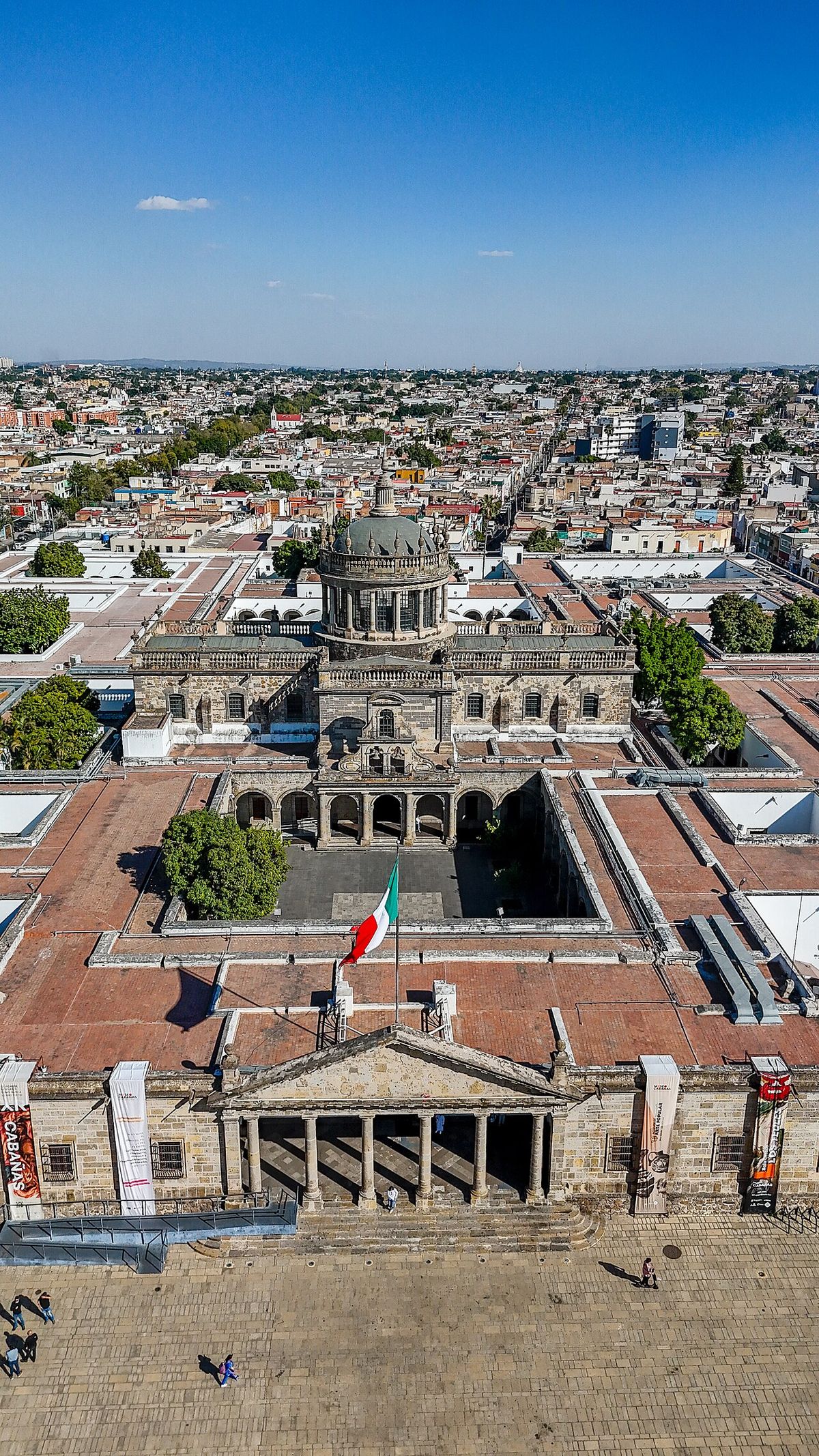
The Hospicio Cabañas in Guadalajara, Jalisco, was built between 1805 and 1810 as an orphanage, hospital, and home for the destitute. The building, now a UNESCO World Heritage Site and cultural centre, is famous for the murals painted by José Clemente Orozco in its chapel. During its history as an institution for orphans and the poor, many of its residents died within its walls, and their spirits are said to remain. Staff and visitors report hearing children's voices in the corridors, the sound of small feet running on the stone floors, and seeing the apparitions of children in the cloistered courtyards.
The hospice's architecture — 23 courtyards arranged in a cruciform plan — creates a massive but intimate complex where sounds carry between the patios. Orozco's murals, which depict scenes of conquest, revolution, and the human condition, add an artistic dimension to the spiritual atmosphere. The Hospicio Cabañas represents Mexico's complex relationship with its institutionalized poor — the building was created to house society's most vulnerable, and their ghosts serve as a reminder that the care provided was not always sufficient.