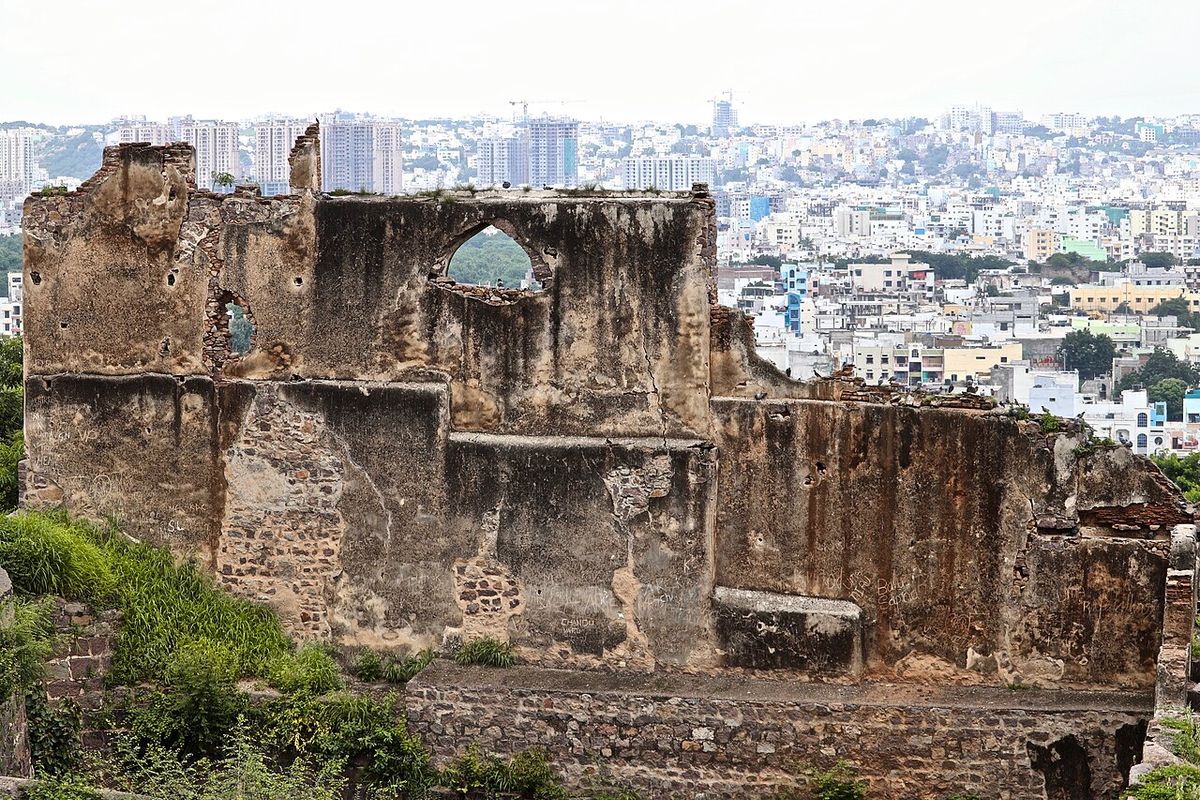
Golconda Fort in Hyderabad, Telangana, was the capital of the medieval Qutb Shahi sultanate and one of the most formidable fortifications in India. The fort, which dates to the 13th century and was expanded by successive rulers, witnessed sieges, betrayals, and the slaughter of thousands during the Mughal emperor Aurangzeb's conquest in 1687. The fort complex spans eight gates, four drawbridges, and numerous royal apartments spread across a granite hill. Visitors and security guards report hearing the clash of weapons and war cries echoing from the empty ramparts at night, particularly near the Fateh Darwaza (Victory Gate) where the final assault took place.
EVP recordings taken within the fort have allegedly captured voices speaking in Deccani Urdu and Persian. Some visitors describe seeing soldiers in medieval Islamic armor standing guard at the gates after sunset. The fort's famous acoustic system — a hand clap at the main gate can be heard at the highest point, nearly a kilometre away — adds an eerie quality, as unexplained sounds seem to travel through the structure with supernatural clarity. Golconda's association with the fabled Koh-i-Noor diamond, which was kept in the fort's treasury, adds to its legendary status.