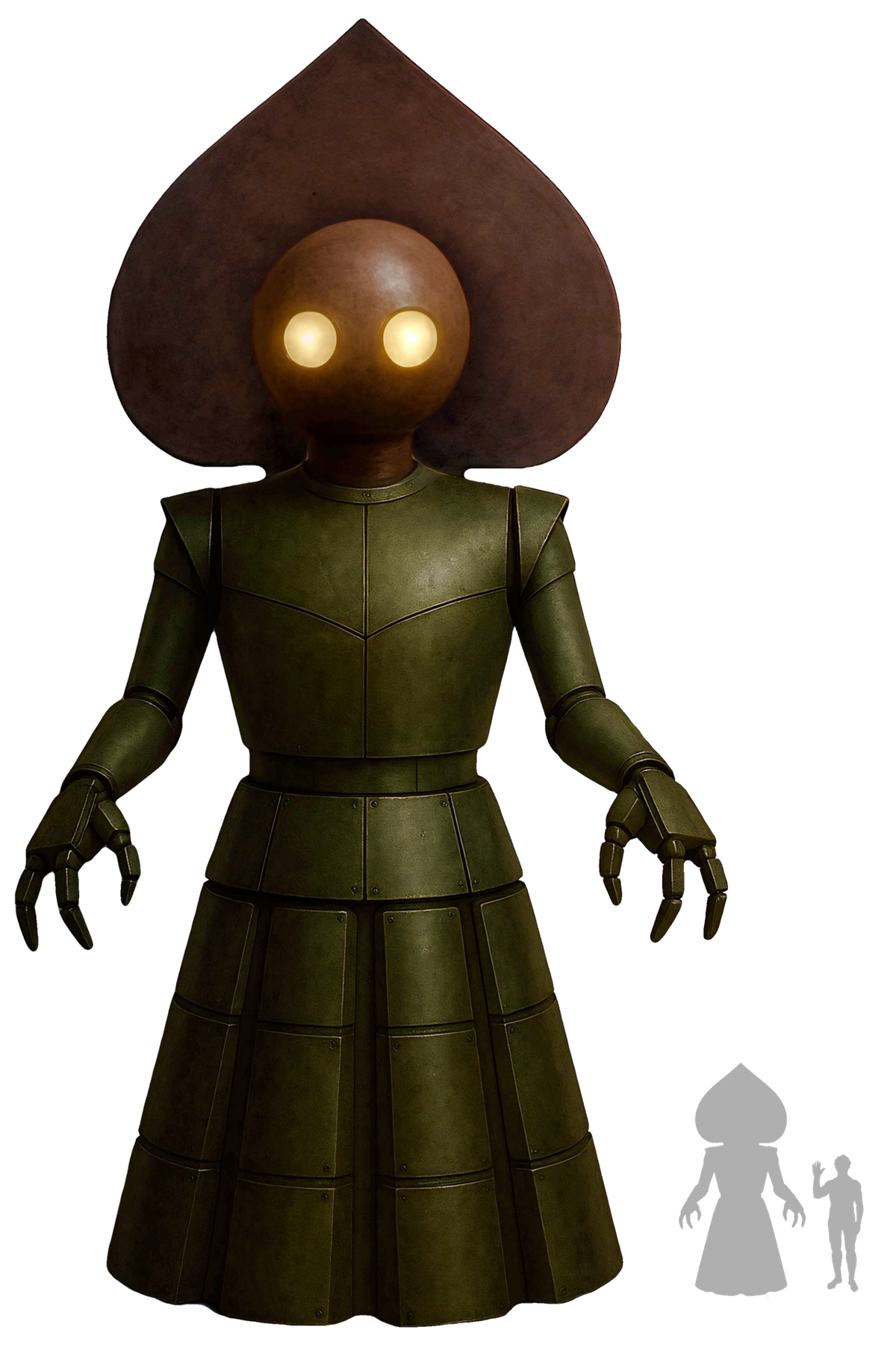
Shortly after 7:15 PM on September 12, 1952, a group of boys playing football in the small farming town of Flatwoods, Braxton County, West Virginia saw a bright object streak across the evening sky and apparently land on the farm of G. Bailey Fisher. Led by Edward May and his brother Fred, the group — which included seventeen-year-old National Guardsman Eugene Lemon — went to the Fisher farm to investigate, joined by Mrs. Kathleen May and her neighbor, beautician Mrs. May Waugh.
As they climbed the hillside with a flashlight, a foul, sulfurous mist began to sting their eyes. Lemon's dog ran ahead barking and returned whimpering. At the top of the hill the group saw a pulsing red glow through the fog. When Lemon's flashlight fell on it, the beam revealed what would become one of the most bizarre creature descriptions in American folklore: a ten-foot-tall figure with a dark body resembling a pleated skirt, a round spade-shaped head or hood glowing orange-red, and two luminescent eye-like points staring down at them. The figure made a hissing sound and glided toward the witnesses. The group fled in terror.
By the time they reached Kathleen May's home, several were vomiting and Lemon had lost consciousness. A Braxton Democrat reporter named A. Lee Stewart arrived shortly after and went to the site with state troopers. The ground where the figure had stood was marked with skid tracks and a metallic odor. Within days, Air Force investigators and newspapermen from as far away as New York were interviewing witnesses.
Contemporary skeptics offered owls, a fallen meteor, or an aircraft warning beacon as possible explanations, but none adequately addressed the scale, the witnesses' physical symptoms, or the ground traces. The Flatwoods Monster — also known as the 'Braxton County Monster' or the 'Phantom of Flatwoods' — became a staple of American cryptid folklore. The town now displays a Flatwoods Monster statue and hosts a small museum, cementing its place as a cultural landmark.