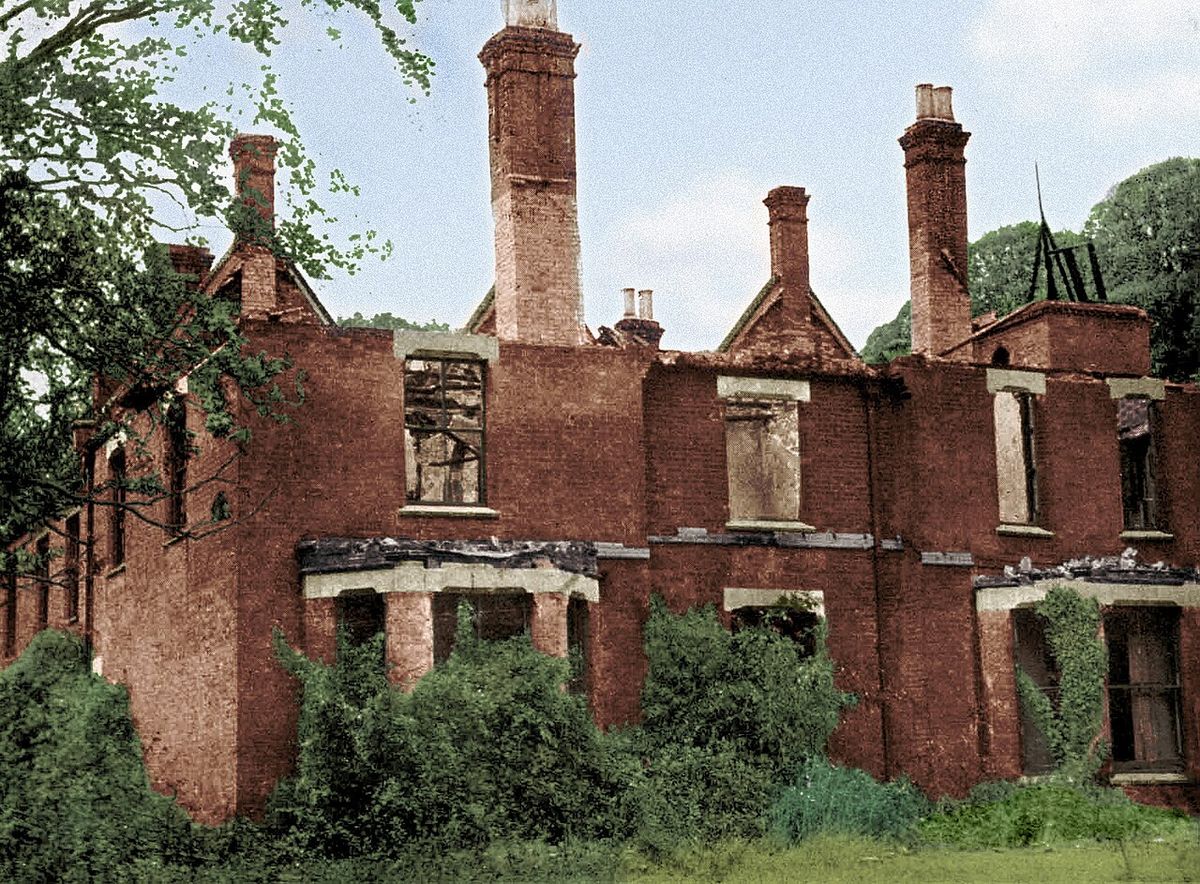
Borley Rectory, a Victorian Gothic house in the remote Essex village of Borley, was famously declared "the most haunted house in England" by paranormal investigator Harry Price, who conducted extensive investigations there in the 1930s. The rectory's reputation for supernatural activity spanned decades and involved multiple witnesses, making it one of the most documented — and most debated — haunting cases in British history.
The rectory was built in 1862 for the Reverend Henry Bull on a site with far older associations. A medieval monastery had reportedly stood nearby, and a local legend told of a nun from the nearby Bures convent who had eloped with a lay brother. Both were caught: the brother was executed and the nun was bricked up alive within the convent walls. Whether this legend has any historical basis is uncertain, but it became central to the Borley mythology.
From the moment the Bull family moved in, strange phenomena were reported. A phantom nun was seen gliding across the garden at dusk. A ghostly coach drawn by headless horses was witnessed on the rectory drive. Unexplained footsteps echoed through the house at night. When the Reverend Lionel Foyster and his wife Marianne moved into the rectory in 1930, the activity intensified dramatically. Objects were thrown, messages appeared scrawled on the walls — some addressed directly to Marianne — and bells rang of their own accord. Harry Price rented the rectory in 1937 and installed a team of observers who documented over 2,000 incidents. A séance predicted the house would burn down, and in February 1939, a fire of disputed origin destroyed the building. During demolition of the ruins, a human skull was discovered beneath the cellar floor. Borley Rectory's legacy as Britain's most celebrated haunted house endures, despite decades of skeptical counter-investigation.