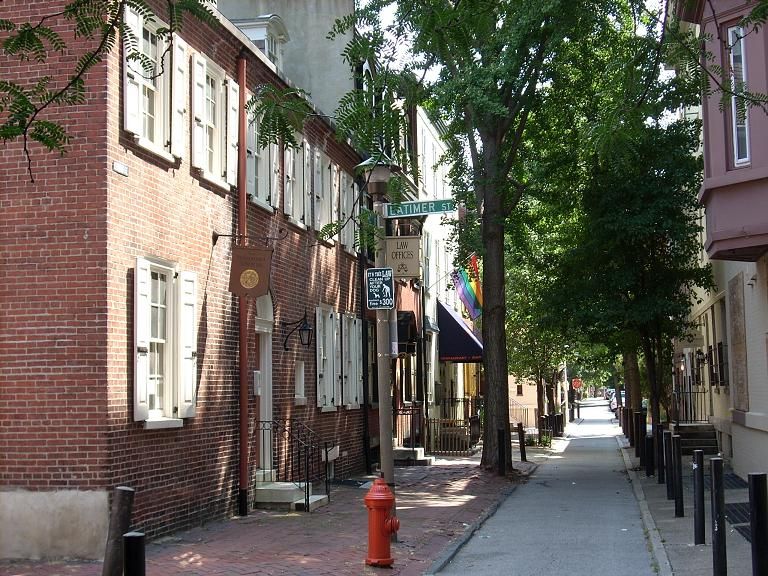
Washington Square in Philadelphia, one of the five original squares planned by William Penn in 1682, served as a burial ground for the city's poor, strangers, and victims of the yellow fever epidemics that devastated Philadelphia in the 1790s. During the Revolutionary War, soldiers who died in the nearby Walnut Street Prison were also buried here. An estimated 2,000 or more bodies lie beneath the square's manicured lawns.
The square's most famous ghost is Leah, described as a Quaker woman who wanders the park at night wearing the plain dress and bonnet of her faith. She has been seen by security guards, late-night dog walkers, and residents of the surrounding buildings. Some witnesses describe her kneeling at the base of a tree, as if praying or mourning. Other reported phenomena include shadowy figures moving through the park after dark, cold spots that appear along specific paths, and the distant sound of moaning or weeping.
The Tomb of the Unknown Revolutionary War Soldier, located in the square, adds a commemorative dimension to the haunting. The square's genteel appearance — with its green lawns, colonial-era trees, and surrounding Federal architecture — belies the thousands of bodies beneath its surface and the suffering they represent.