Fort Bonifacio in Taguig City, Metro Manila, is the Philippines' most active military installation — and one of its most densely haunted. The sprawling complex, which encompasses the headquarters of the Philippine Army, the Libingan ng mga Bayani (Heroes' Cemetery), and the adjacent Manila American Cemetery and Memorial, concentrates within its perimeter the spirits of thousands of soldiers from multiple conflicts spanning more than a century.
Philippine Army personnel stationed at Fort Bonifacio report encountering ghosts of soldiers with an almost matter-of-fact regularity. Guards on night duty describe seeing formations of soldiers marching in the darkness — "phantom platoons" that move in disciplined columns through areas of the fort that should be empty at that hour. The soldiers' uniforms vary: some are described as wearing World War II-era gear, others in equipment from the Korean War or Vietnam-era conflicts. They march in silence, their boots making no sound on the concrete, and they do not acknowledge the living soldiers who watch them pass.
The Libingan ng mga Bayani, where Philippine presidents, national heroes, and fallen soldiers are interred, generates its own category of encounters. Groundskeepers and visitors report seeing figures standing at specific graves — mourners who dissolve when approached, soldiers in dress uniform saluting the headstones of fallen comrades. The cemetery is particularly active on November 1st, All Saints' Day, when Filipino families visit the graves of their dead and the boundary between the living and the departed grows thin.
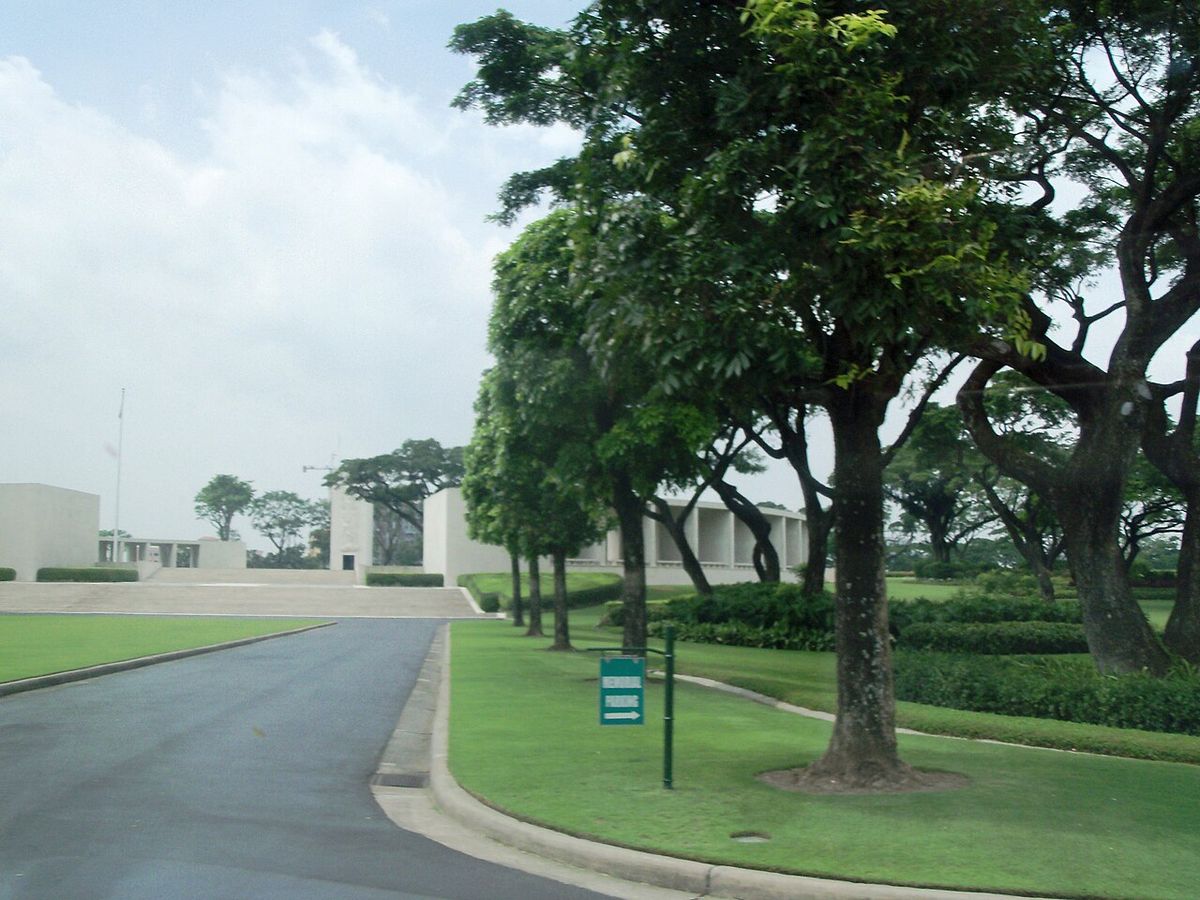
The Manila American Cemetery, which contains 17,206 graves of American military personnel killed in the Pacific Theater, adds an international dimension to Fort Bonifacio's hauntings. Security personnel describe seeing American soldiers in World War II uniforms walking among the perfectly aligned white crosses, and hearing the sound of English being spoken in the empty memorial chapel.
The fort's history as a military installation dates to the Spanish colonial period, and the ground beneath it holds the accumulated dead of the Philippine Revolution, the Filipino-American War, World War II, and subsequent conflicts. For the soldiers who serve at Fort Bonifacio today, the dead are not history — they are neighbors.