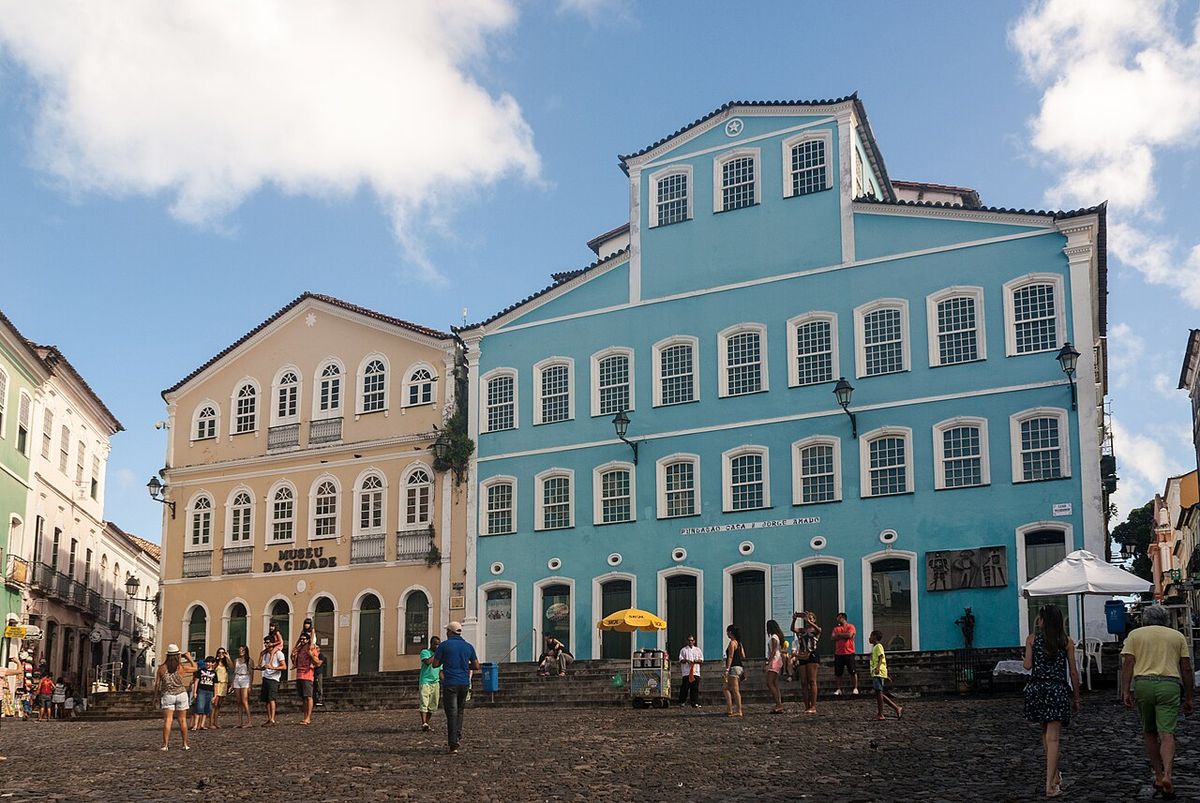
The Pelourinho ('the pillory') district of Salvador de Bahia in northeastern Brazil is the oldest continuously-occupied urban core in the Americas, founded in 1549 as the first capital of Portuguese colonial Brazil. Its name derives from the whipping post that stood in the central square — Praça do Pelourinho — where enslaved Africans were publicly punished, tortured, and frequently executed during the three centuries of the Portuguese slave trade. More than four million enslaved Africans arrived in Bahia between 1550 and 1888, and Pelourinho was the processing and punishment centre of the system. The district is today a UNESCO World Heritage Site and one of the most spiritually intense urban landscapes in the hemisphere.
Pelourinho's ghost tradition is inextricable from its trauma history and from the Afro-Brazilian religion of Candomblé, whose terreiros (houses of worship) preserve the spirits of enslaved ancestors. The district's most-reported apparitions concentrate in the Casa do Benin, the Convento de São Francisco, the Casa de Jorge Amado, and the old Igreja do Rosário dos Pretos (built by enslaved Africans themselves between 1704 and 1709). Residents and the district's many pousada-hotel operators routinely report hearing chains dragging on cobblestones in the small hours, the sound of women weeping in Yoruba and Ewe, and the impression of crowds moving through empty alleys. The Rua do Carmo, which descends steeply from the square, is said to be so spiritually charged that tour guides instruct visitors not to turn back once they have begun the walk after dark.
Pelourinho's paranormal tradition is taken seriously by Candomblé priests (mães-de-santo and pais-de-santo), who perform annual cleansings and offerings at specific locations across the district. The Festa do Bonfim in January and the Festa de Iemanjá in February both pause at Pelourinho for syncretic Christian-Candomblé ceremonies acknowledging the ancestral presence. Pelourinho stands as the most concentrated example of African-diasporic ancestor tradition in the urban Americas — a place where the historical record, living religious practice, and continuously-reported phenomena are all in active conversation.