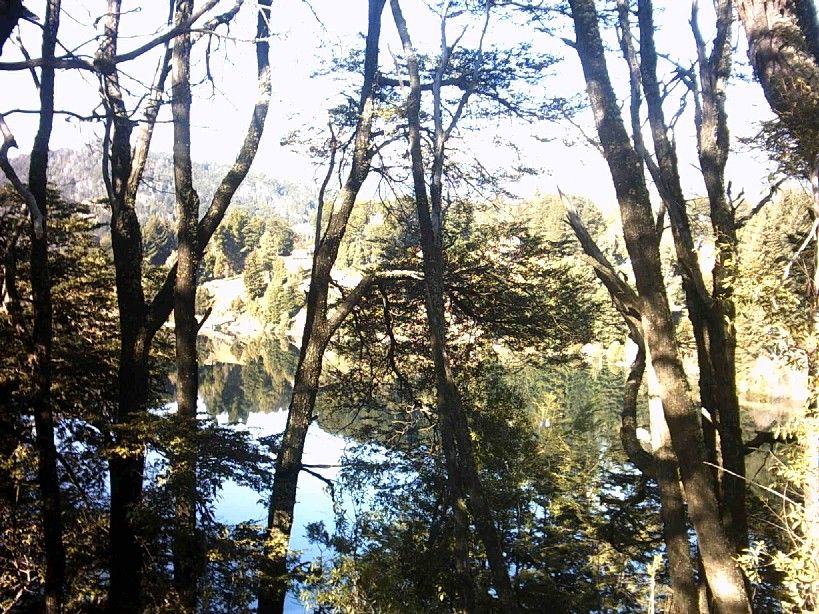
Nahuelito is the cryptid of Argentina's Lake Nahuel Huapi — a 550-square-kilometre glacial lake in the Andean foothills of Patagonia's Río Negro Province. Mapuche oral tradition long pre-dating European contact speaks of a Cuero ('leather' / 'hide'), a huge aquatic creature that attacked horses crossing the rivers draining into the lake. European reports began soon after Argentine settlement of the Bariloche region in the 1880s and accelerated after 1922, when gold-prospector George Garrett Harris formally reported to the Toronto Globe that he had observed a large-necked creature 'forty feet long' surfacing in the Pass of the Limay.
Harris's report triggered the first formal international scientific expedition for a South American lake monster. In 1922, Buenos Aires director Clemente Onelli dispatched Jose Cabrera and an expedition team, but bad weather prevented a definitive search. Over the following century, hundreds of sightings have been logged by tour-boat operators on the lake, homesteaders on the western shore near San Carlos de Bariloche, and visitors to the Isla Victoria ferry. A 2006 photograph by Argentine tourist Jessica Campbell appears to show an elongated dark shape in the Blest Arm; the image was published in Clarín and subjected to analysis at the University of Buenos Aires without definitive resolution.
Local hypotheses range from a surviving plesiosaur-like relic (anatomically implausible at this latitude and altitude) to an unrecorded species of giant otter (Pteronura brasiliensis is known from the broader Plata basin) to an exceptionally large specimen of the existing Patagonian catfish Diplomystes viedmensis. The lake's 438-metre depth, cold-water stratification, and proximity to the Mapuche cultural complex (which still holds ceremonies at the Peñón de Arelauquen) sustain the Nahuelito tradition. The Argentine Ministry of Tourism formally recognizes the legend as an asset of the Bariloche region, and the creature has appeared on postage stamps and sports-team logos.