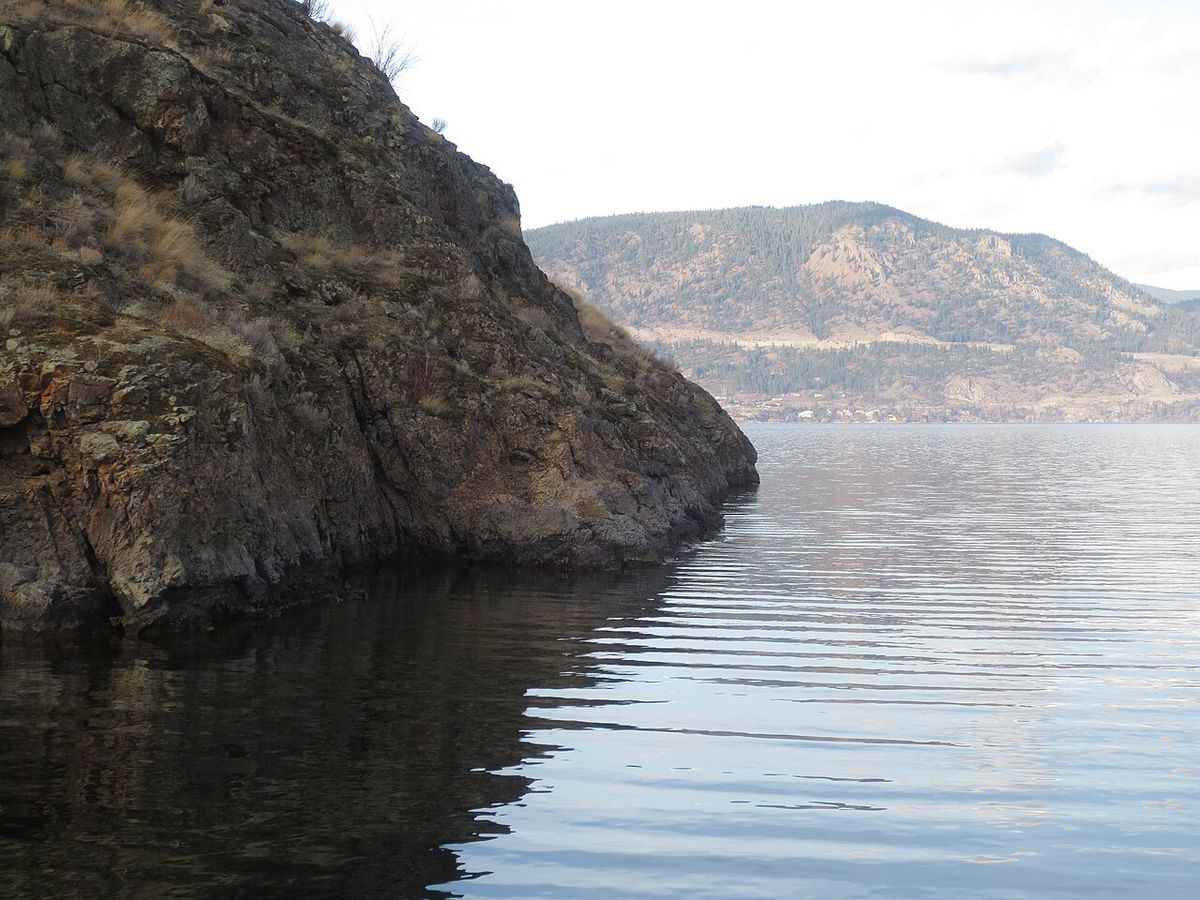
Long before European settlers arrived in British Columbia's Okanagan Valley, the Syilx (Okanagan) people preserved a complex body of tradition regarding a powerful water being called N'ha-a-itk (also rendered Naitaka), meaning 'lake demon' or 'sacred creature of the water.' In Syilx oral history, N'ha-a-itk inhabits the deep waters of Okanagan Lake, particularly near a small rocky island called Rattlesnake Island, and demands respect from any who travel across the water. Travelers making the crossing by canoe would offer small animals — typically chickens or small game — by dropping them into the lake near the island to appease the creature and ensure safe passage. The failure to make offerings was believed to invite storms, capsized canoes, and drowning. One version of the origin story describes N'ha-a-itk as a man transformed into a lake serpent by the gods as punishment for committing a murder.
Other versions describe the creature as a primordial water guardian that has inhabited the lake since time immemorial. When European settlers arrived in the 1860s and began recording encounters with an anomalous creature in the lake, the Syilx recognized the descriptions immediately — the newcomers were encountering N'ha-a-itk, the being their ancestors had known for thousands of years.