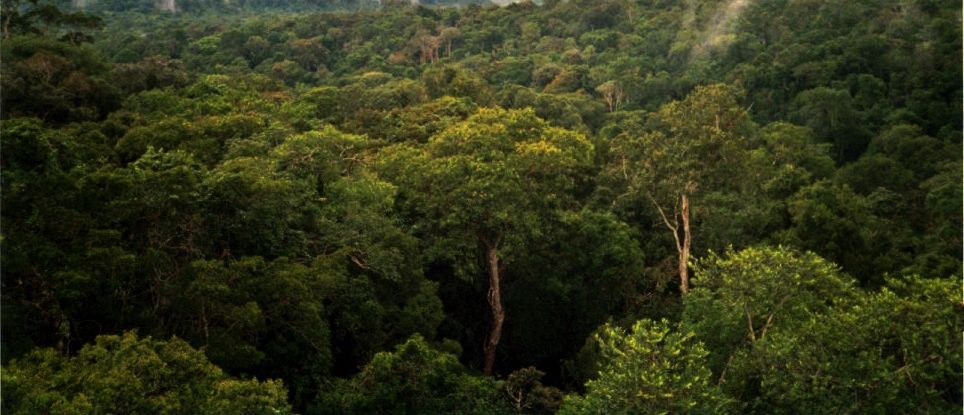
The Mapinguari is the most feared cryptid of the Brazilian and Bolivian Amazon, reported for centuries across the western Amazon basin from Rondônia and Acre in Brazil into eastern Bolivia. Indigenous Kichwa, Matis, Kayapó, and Tupi-Guarani traditions describe a bipedal creature seven to ten feet tall, covered in thick red hair, with a single backwards-facing foot, a second mouth in the center of its abdomen, and an overpowering stench that incapacitates pursuers. The creature is said to emit a terrifying scream that can be heard for kilometres, and to have skin so tough that bullets will not penetrate except through the belly-mouth. Indigenous hunters routinely avoid specific tributaries said to be Mapinguari territory.
Brazilian cryptozoologist David C. Oren, a zoologist formerly at the Goeldi Museum in Belém, conducted extensive field research on the Mapinguari between 1988 and 2001. Oren catalogued more than 100 first-person accounts from indigenous and caboclo hunters, collected alleged hair and claw samples (all of which DNA-resolved as known animals), and identified what he called 'striking anatomical parallels' with the ground sloth genus Mylodon. Mylodon, particularly the species M. darwinii of Patagonia, survived until approximately 10,000 years ago, and Oren argued that a surviving Amazonian population might plausibly account for the Mapinguari tradition — with the 'backwards foot' and 'belly mouth' reflecting observable aspects of sloth anatomy (foot posture and navel-region scent gland) when viewed by pursuing hunters.
Oren's 1993 and 2001 papers in the journal Revista Brasileira de Biologia argued for targeted survey in the upper Juruá and Purus rivers. Fellow Brazilian paleontologist Cástor Cartelle, of the Federal University of Minas Gerais, subsequently recovered a 12,000-year-old Mylodon skeleton from a flooded cave in Brazilian Amazonia. Whether the Mapinguari represents a surviving relict population of ground sloths, a folk-memory of extinct megafauna, or a purely cultural tradition, the creature remains the defining cryptid of the Amazon and a central topic in South American cryptozoology.