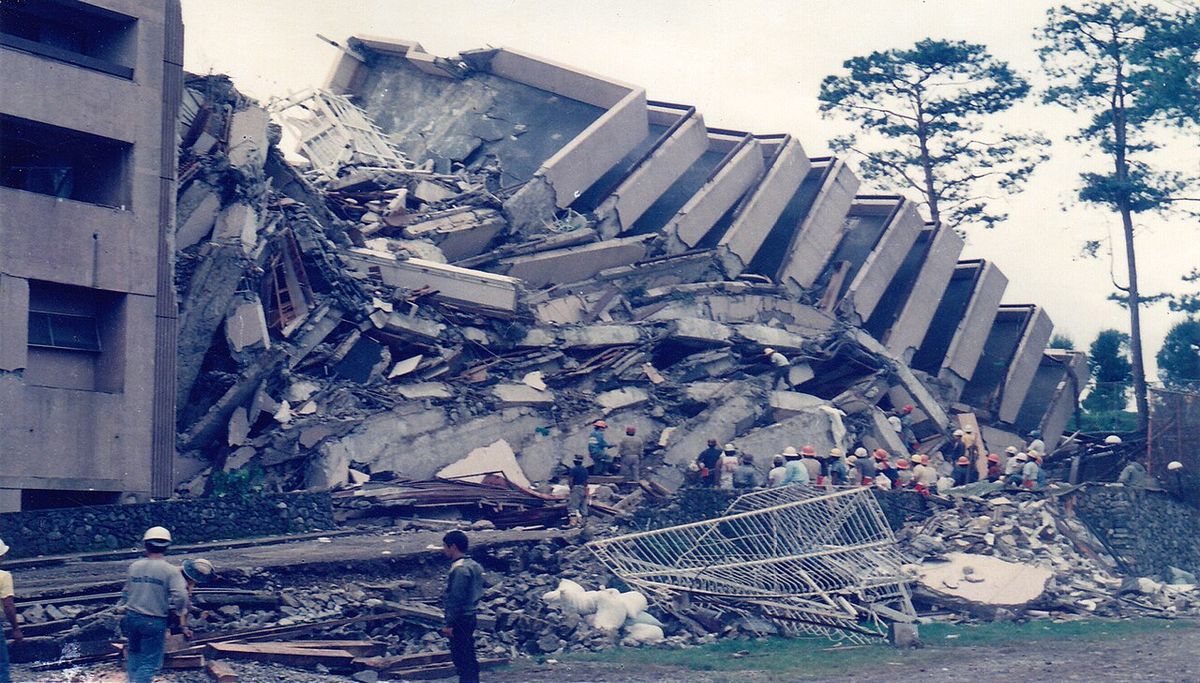
On July 16, 1990, a magnitude 7.7 earthquake struck Luzon, devastating the mountain city of Baguio and killing over 1,600 people across the region. The single deadliest structural collapse was the Hyatt Terraces Hotel, a 12-story luxury hotel that pancaked in seconds, entombing guests and staff in a mountain of concrete and rebar. At least 50 people died in the Hyatt alone, many of them trapped alive in the rubble for days before succumbing.
The hotel was never rebuilt. The site was cleared of major debris, but the lot has remained vacant — a gap in Baguio's skyline that locals say is occupied by the spirits of those who died in the collapse. Visitors to the site and residents of neighboring buildings report seeing figures moving across the vacant lot at night, particularly during the anniversary period around July 16th. The figures are described as disoriented, wandering aimlessly, as if searching for the building that should be standing around them.
Survivors of the Hyatt collapse and the rescuers who spent days digging through the wreckage described hearing voices from within the pile — calls for help, prayers, conversations between the trapped as they waited for rescue that, for many, never came. Some of those who worked the rescue operation report hearing the same voices years later, drifting from the empty lot where the hotel once stood: faint calls for help, muffled pleas, and the rhythmic tapping that the trapped used to signal their location to rescuers.
The 1990 earthquake reshaped Baguio physically and spiritually. The city's boom-era development, which had prioritized profit over earthquake-resistant construction, was revealed as a fatal gamble. The Hyatt Terraces, which had been one of the city's most prestigious addresses, became its most haunting absence — a void in the landscape where luxury once stood and where the dead still search for the walls that collapsed around them.